Walter Kohn Quotes
My father, who had lost a brother, fighting on the Austrian side in World War I, was a committed pacifist.
Kohn, Walter. "Walter Kohn - Biographical." Les Prix Nobel. The Nobel Prizes 1998, edited by Tore Frängsmyr, Nobel Foundation, 1999.


This was Ford in the middle of his career. As he got older, he changed radically. He was later one of the biggest supporters and admirers of Adolf Hitler and his aggressive militarism.


Theodore Roosevelt was the Presidential nominee. Johnson was a leader of some members of Congress some of whom were extreme isolationists and some of whom were Nazi sympathizers and Hitler admirers. When the Japanese attacked Pearl Harbor later that year, Germany, fulfilling its treaty with Japan, declared war on America, Johnson’s group no longer mattered. Before WWII most Republicans were opposed to Defense Spending and accused the Democrats of being war hawks. After WWII, they flip flopped and became more hawkish than the Democrats who they accused of being soft on defense for years thereafter. See {631380} for President Roosevelt’s different view.


While Queen Mary was presenting medals to British soldiers during World War I, she said this to a soldier who had exclaimed “No more bloody wars for me”.


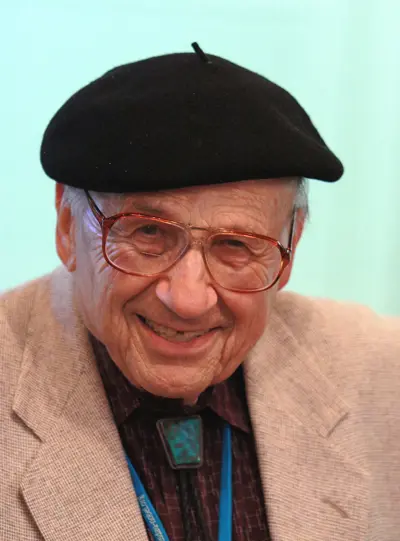
Walter Kohn was an Austrian-American theoretical physicist and theoretical chemist. He was awarded, with John Pople, the Nobel Prize in Chemistry in 1998. The award recognized their contributions to the understandings of the electronic properties of materials. In particular, Kohn played the leading role in the development of density functional theory, which made it possible to calculate quantum mechanical electronic structure by equations involving the electronic density (rather than the many-body wavefunction). This computational simplification led to more accurate calculations on complex systems as well as many new insights, and it has become an essential tool for materials science, condensed-phase physics, and the chemical physics of atoms and molecules.
