Kapil Sibal Quotes
My abiding faith in the wisdom of our electorate is what gives me hope.
Sibal, Kapil. Shades of Truth: A Journey Derailed. Rupa Publications, 2018, p. 250.

Also used in his Message to Congress, May 25, 1967


The Iraqi Prime Minister was a Shiite autocrat who had a winner take all approach to government and other than putting token Sunnis and Kurds in the Cabinet ran a very discriminatory government and could muster no loyalty with Kurds and Shiites.


There are very few places in America where a public official could get away with statements like this one.

The only soldier ever so honored. At the beginning of WWII, President Roosevelt and Churchill wanted the U. S. Army to invade German and Italian North Africa. Marshall, General Eisenhower, and all the other military men, advised that while it was possible, it would be a diversion from the strategic objective of invading Europe. None the less FDR ordered the invasion. The effect on the American people was wonderful, It showed that the Germans were not invincible, increased enlistment and morale at home, and developed more popular support for the war. Later, Marshall learned much about Democratic leadership and he, himself became a very effective government leader, and began to appreciate FDR’s approach but with a little cynicism about democracy.


Compare his 1884 campaign slogan and personal motto, "Public office is a public trust"


At the time less than 10% of the Southern Blacks were allowed to vote. The result was that Southern segregationists were elected to Congress even in a state like Mississippi which had a majority Black population, The Southern segregationist bloc was large enough that with a few very conservative Republicans, they formed a coalition could block any civil rights legislation including voting rights reform,

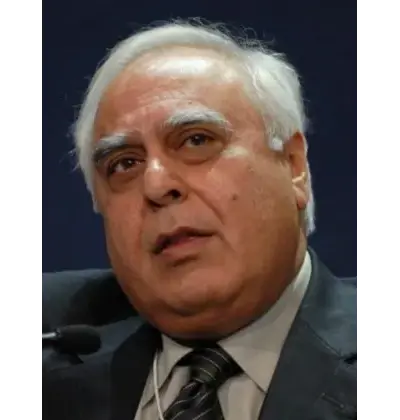
Kapil Sibal is an Indian politician belonging to the Indian National Congress party. A lawyer, he formerly served at the helm of various ministries in the Congress-led UPA government over the years – beginning with the Ministry of Science & Technology, then the Ministry of Human Resource Development followed by the Ministry of Communications & IT, and the Ministry of Law & Justice.
