Irshad Manji Quotes
Muslims have been sticking it to each other for decades.
Irshad Manji, Canadian Journalist, Islamic Reformer, & Human Rights Activist, The Trouble with Islam Today, 2003
Sourced by: Eigen's Political and Historical Quotations


The report was praised by some of the intellectuals of Pakistan and most of the non-Islamic world. However, Pakistan the discussion of each of the cleavages, instigated the public passion of the cleavage and nothing significant was done.


There is of course no way to tell the sect of a Muslim by physique alone, although there are major behavioral differences. The reason the quotation was newsworthy was that it was amazing that a senior Senate leader was so ignorant of such a critical and problematical subset of the world.

Muslims had engaged in violent demonstrations to insist on more Sharia law and the curtailment of behavior that the Muslim Mullahs determined to be contrary to Sharia and Islam. In Nigeria Muslim violence and intimidation had at the time already caused one of the Nigerian states to adopt Sharia instead of civil law. Many Muslims continued the violence in order to spread the adoption of Islamic law. In most counties, there were threats of law enforcement crackdowns to curtail the Muslim violence and attacks on Christians and other religions. In Nigeria however, the Christians under Akinola’s leadership made this not so subtle veiled threat to retaliate. It seems to have worked in the short run although the religious tensions remained very high and no one knew whether or not religious violence or even war would break out.

This quotation is important because it was typical of the view of many Muslims in the world in the beginning of the 21st century. However. What most of these Muslims ignore is the fact that Islamic Nations have ben warring with each other since there have been Islamic nations. In addition, the different Muslim sects have been brutally trying to exterminating each other since the death of The Prophet and civil war broke out over his successor.

At the time almost everyone thought him overly pessimistic. Despite huge efforts to bridge the differences including the partition of India and creating a separate Muslim state, the Muslims have become even more discontented in modern times. The Muslim antagonism however has expanded beyond the Hindus, to include the Christians, Jews, Bhais, Buddhists and any other religion in control of land where there are Muslims or they feel should have Muslims. Today, as in 1925 however, the difficult was caused be a very vocal and often violent extremist minority of the Islamic population.

While it may be true that some major powers do not presently want unity between Muslims, the Sunni-Shiite conflict has been ongoing for centuries—long before many “major powers” even existed. It is the oldest, continual civil war in history. It is certainly true that major Islamic powers like Saudi Arabia oppose unity was Saudi Arabia is a Sunni majority country and regard the Shiites as not only blasphemous and evil, but see them as dangerous.


This appeal was to the Sunni Muslims to join in the war against the Shiite Muslims and the Americans. While there have been very few rapes by American forces in the Iraq war there have been some of Sunnis against Shiite women and vice versa. Sexual defiling is such an emotive concept for Iraqi Muslims, that the few cases there have been were propaganda fodder. Note the use of the term “Crusader” to designate Christians. They are still living in world of a thousand years ago.

6th Baron Byron. This is one the earliest references to the ultra-fundamentalist Wahhabi Islamic sect which dominated Saudi Arabia Islam in the late 20th and early 21st century and which inspired terrorism against the West and Israel. When Byron wrote this canto the sect was just a decade old and had already taken over Mecca by violence. Byron was prophetic.

He coined the term “Shiite Crescent” in this quotation.

The Alawites, always a Muslim minority in Syria, have been hated, distrusted, discriminated against, and physically persecuted by the majority Sunni Muslims as long as they have existed. When in Syria, the Alawites, although a minority, gained political control of the country and for the first time were secure in their own country. In the early 2000s, the Sunni majority tried to oust the Alawite leadership, but the Assad government put down the protests brutally. Most Western observers did not know of the anti-Alawite history of persecution in Syria. Returning to that position of victimization was so feared by the Alawites that they fought tooth and nail, murdering many civilians, to be sure that the historical position of the Alawites would not occur again. This makes talks and negotiations over the Syrian Civil War so difficult. The Alawites believe that if they do not control the nation, they will be massacred by the majority. The Christians and the Jews also believe that if the Sunni’s get control, their communities will be in great danger. Complicating the situation even further, is that fact that of the insurgent Sunni groups, the tolerant secular ones who started the revolution are no longer in control of the insurgents. De facto dominance has passed to the Jihadist, Islamic extremists who hold the view expressed by this quotation.


She is a leading American Arab who is a Syrian expatriate.
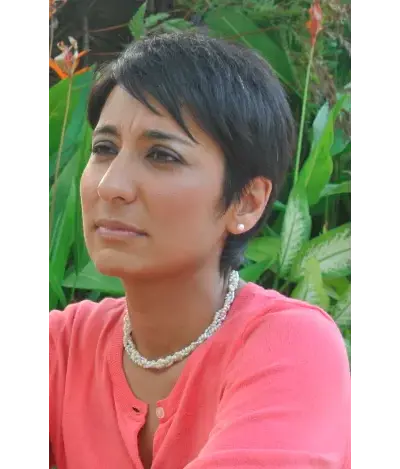
Irshad Manji (born 1968) is a Ugandan-born Canadian educator. She is the author of The Trouble with Islam Today (2004) and Allah, Liberty and Love (2011), both of which have been banned in several Muslim countries. She also produced a PBS documentary in the America at a Crossroads series, titled Faith Without Fear, which was nominated for an Emmy Award in 2008. A former journalist and television presenter, Manji is an advocate of a reformist interpretation of Islam and a critic of literalist interpretations of the Qur'an.
