Eamon de Valera Quotes
Mr. Churchill is proud of Britain's stand alone, after France had fallen and before America entered the War.
De Valera, Éamon. "Broadcast to the Nation, 16 May 1945." Speeches and Statements by Eamon de Valera 1917-1973, edited by Maurice Moynihan, Gill and Macmillan, 1980, p. 475.


De Gaulle was a very difficult ally. He was ashamed that so many of his countrymen collaborated with the German invaders including fighting against the allies and the collapse of the French Army which, although it was larger than the German invader, had exhibited much cowardice. His way of dealing with this shame was to exaggerate the positive role that the loyal French and the serious Free French Fighters and to deny the extent of the negative behavior. He was always demanding that the small Free French Army be included in all military operations, and when successful, they be given equal credit along with the British, Americans, and Russians even though the French only contributed a tiny proportion of the effort. De Gaull’s ego, personal and national was enormous and Churchill had just as great a national ego. Hence for De Gaulle, Churchill was a kind of enemy. The “Channel” referred to the English Channel.


After the sneak attack on Pearl Harbor, Stimson drafted the Declaration of War that President Roosevelt would ask Congress to vote for. However, there was a small but very vocal group of extreme Republican conservatives who opposed assisting England against Hitler and saw German and Italian Fascism as positive forces. They would oppose any administration declaration of war against Germany and Italy who had not yet attacked any American facilities. The President realized that German and Italy had a Mutual Defense Treaty with Japan, and when we declared war against Japan, would have to ally with Japan or reneg on their treaty. So FDR removed Germany and Italy from the Declaration and Congress just declared war against Germany. In the next days, Germany and Italy declared war against the United States, and the de facto situation was as Stimson had drafted it, but FDR had not given the right wing American Fascist sympathizers any issue to criticize the administration.


Note that he assumes that not only will there be another World War, but he assumes that we will be on opposite sides.

Coughlin was a great admirer of Adolf Hitler and Benito Mussolini and the Fascists. He was one of the American “heroes” in Nazi Germany, receiving assistance from the Nazi government. Between his anti-Semitism and support for Hitler, Fascism and radical socialism, the Vatican ordered him off the air and shut down his political demagoguery.


The general was replacing George S. Patton as commander of the Third Army. Patton had opposed the deNazification policy of the allies and caused a great deal of public relations difficulty for the army command and the administration, as reporters would frequently print his views. Truscott was one of Patton’s loyal assistants. The minute he took over, the press wanted to find out if his views were the same as his former boss regarding the Nazis. They were quite different. Reporters had no story.

Lindbergh, a great aviator, was a Fascist who like most of the America Firsters was a great admirer and supporter of Hitler and Mussolini. The British and the Jews were by no means unified in favor of war but the majority of each group was. The British had theor Fasscists including the Duke of Windsor who was pressured to abdicate. There were even some Jews who thought that Hitler was an aberation and the German people would never follow him. But the American right wing extremists were adamant that the United States should not enter the war. Even after the Japanese sneak attack on Pearl Harbor and the German Declaration of War against the United States many of the


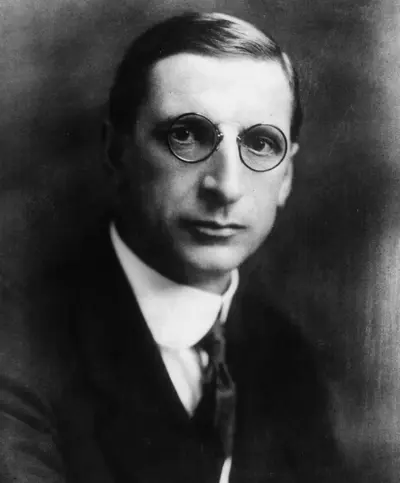
Éamon de Valera was a prominent statesman and political leader in 20th-century Ireland, serving several terms as head of government and head of state, with a prominent role introducing the Constitution of Ireland.
