Bernhard von Bulow Quotes
Mr. Chamberlain desires to avert the threat to England's peace by making England, in alliance with Germany, stronger than her rivals and so to force them to renounce their hostile intentions against her.
Bülow, Bernhard von. German Diplomatic Documents, 1871-1914. Translated by E. T. S. Dugdale, vol. 3, Methuen & Co., 1930, p. 109.


At that time there were extensive meetings and discussions for the creation of what was to be the United Nations. The negative view of the United Nations or other international security organization is now and always has been held by a vocal minority in the United States.


This was very much a minority opinion at the time, and has much historical significance as he was the father of the British Prime Minister, Neville Chamberlain, 1869-1940, whose appeasement of Germany led to Word War II. . See {585941}.


This was written when the United States was not a dominant military power. At the beginning of the 20th century, the U. S. had the same size military as Argentina. It was France, German, Turkey and England who had the military superiority and it was they who tended to find excuses for war. After WWII, the U. S. was dominant and was involved with a number of wars and military incursions, often with nations that had not attacked the U.S. Korns’ principle was most dramatic when the George W. Bush administration invaded Iraq on the excuse that the Iraqis were developing weapons of mass destructions and then might attack the United States. After the successful invasion, the excuse was shown to be hollow as there were no signs of sophisticated weapons development.


See Benedict Spinosa for an earlier absense or war view. Also, JFK more recently.


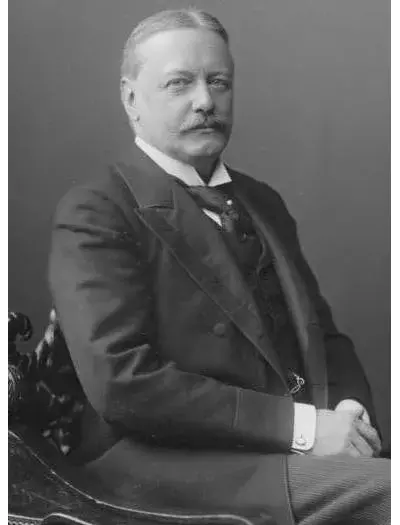
Bernhard Heinrich Karl Martin von Bülow, created Fürst von Bülow in 1905, was a German statesman who served as Foreign Minister for three years and then as Chancellor of the German Empire from 1900 to 1909. A fervent supporter of Weltpolitik, Bülow single-mindedly devoted his chancellorship to making Germany a leading power on the world stage. Despite presiding over sustained economic growth and technological advancement within his country, his government's foreign policy did much to antagonize the international community and significantly contributed to the outbreak of the First World War.
