Percy Bysshe Shelley Quotes
Monarchy is only the string that ties the robber's bundle.
Percy Bysshe Shelley, 1792-1822, English Poet & Reformer, A Philosophical View of Reform, 1819
Sourced by: Eigen's Political and Historical Quotations


This is a variation of the famous Lord Acton quotation: {292904}.

Husayn Ali Nuri. This was a series of letters which he wrote to Napoleon, the Sultan and the other rulers of the day. At the time he was exiled to Edirne by Ottoman Sultan Abdulaziz.

Head of the Sikh Religion

Prior to Cooke’s indictment of English King Charles I, there was a concept of Royal Impunity—that a sovereign could not legally be called to account for his actions as ruler of the state. The concept of “sovereign immunity” was a concept where the sovereign and his agents could be given immunity for specific actions, but they never would have impunity again where there were no limits to the crimes they might commit against their own people. Charles I refused to even recognize Cooke’s indictment and so have heads of state called to account for their major crimes since then all the way down to Saddam Hussein in 2006 who made the same argument. Cooke was himself hanged, drawn and quartered almost 20 years after the Charles I trial for his part in the “Regicide” so the concept of Royal Impunity did not die quickly.

In the quoted passage, it describes Diogenes as observing a thief being arrested in one of the religious temples by the officials of the temple. He had pilfered one of the temple treasures. Not unlike modern times, most religious organizations raised money be getting donations from the public. Some of the means of many of the religious groups are and have been of dubious morality and if used in commerce would generally be considered fraud. This quotation shows that this is not a new phenomenon nor was it limited to monotheistic religions.


This quotation so impressed Thomas Jefferson that he wrote it in his Commonplace Book.

Lotario de' Conti. The Pope did not want anything to diminish the absolute power of Kings as Popes might be next to lose their absolute authority. Despite the Pope’s nullification, Magna Carta had huge influence in England and the world. Note that the Pope actually called the agreement “unjust”, which gives us an excellent idea of the concept of justice amongst the power elites of the 13th century.


Power tends to corrupt, and absolute power corrupts absolutely. Great men are almost always bad men.
Perhaps the most famous quotation in all of Political Science is this one. What is fascinating is that 74 years earlier, Shelly, the most famous of the English Poets expressed the same idea in one of his great poems. See {627920}. The last sentence of this quote is often excluded.

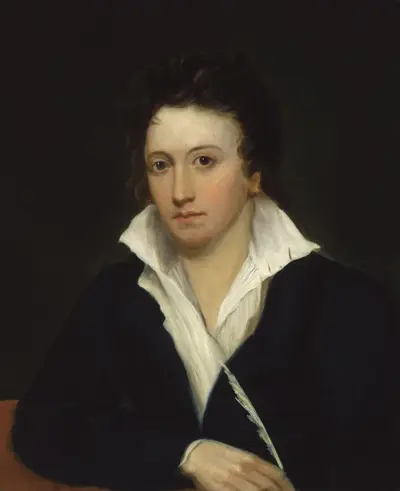
Percy Bysshe Shelley was one of the major English Romantic poets. American literary critic Harold Bloom describes him as "a superb craftsman, a lyric poet without rival, and surely one of the most advanced sceptical intellects ever to write a poem." A radical in his poetry as well as in his political and social views, Shelley did not achieve fame during his lifetime, but recognition of his achievements in poetry grew steadily following his death and he became an important influence on subsequent generations of poets including Browning, Swinburne, Hardy and Yeats.
