Henry Ford II Quotes
Minicars – Mini Profits
This belief held by Ford and most other American auto executives, left the small car market open for the Japanese and the Europeans. This was one of the poor decision that caused the American auto companies to almost go under in 2008 and the Government bailed them out and forced them all to make smaller cars which use less gasoline or use electricity. Then then thrived and paid back bailout funds early. Ford and the others made decisions that almost destroyed the American automobile industry.
Henry Ford II, 1917–1987, CEO Ford Motor Company, Common expression to discourage executives from manufacturing smaller, more energy efficient automobiles, Quoted in Lee Iacocca, Autobiography, 1984
Sourced by: Eigen's Political and Historical Quotations

When earning money is the primary driver of a business, that business has come under the control of people who no longer have the vision, interests or focus of the founders and the people who originally made it what it was. Making money is an important part of making a successful company, but if that is all, then unless one is an investor, there is no great advantage to becoming a customer. All of the great new companies started with a vision that may have included making money but went far beyond that.


The concept and importance of the manager was just beginning to be understood. Sumner was instrumental in making workers and capitalists that they all needed and depended on managers who he called “captains of industry.” Others used the term to describe rich financiers and owners of large enterprises, but Sumner identified a role for the captain who was neither an owner nor a worker—the modern executive.


In the Meltdown of 2008, the American Auto Companies were in dire straights and faced bankruptcy with no certainty that the industry could stay alive., They were running out of money and President Obama decided to make loans, take stock and control and force modernizing on the industry. As a result, and with some Toyota mismanagement, the companies returned to profitability and paid back their government loans early and as a result the bailout had not cost the taxpayers any money. Creditors however were outraged that the lost their preferred advantage had their been a bankruptcy.

He had already decided to save General Motors which was much larger and more critical to the national economy. The normal capitalistic broken down and there were no private firms that were willing to invest, control and continue the companies at any price. There were 1 million immediate jobs at stake with GM plus the collapse of the American Auto Industry including dealers and suppliers. With Chrysler, there were only 300,000 immediate jobs at stake. Ironically, one of the major reasons for trying to save both companies was the fact that Summers team had discovered that the companies were very badly managed. If the bailout could be leveraged to force radical management change and reform, the chances of success would have been much greater than if the companies had been well managed but were still losing money rapidly. The policy decision was brilliantly successful. The reformed auto companies quickly became profitable, and the taxpayer loans were paid back early with interest to and profits to the taxpayers. All those jobs and an iconic American industry not only were preserved but became very profitable and strong and in the final analysis, it did not cost the taxpayers even one dollar. Ford was in less trouble, but if the other two companies failed, the Ford suppliers would mostly fail, and Ford also would have gone down.

What Mises says in this quotation is true. What he does not say that by the time the automobile was developed and then the airplane, the Railroad monopoly had impeded and destroyed so many different entities that the governments had cracked down and curtailed much of the ability of the Railroads to exercise monopolist power. If the Railroads had as much power in 1920 as they did in 1870, there probably never would have been a thriving auto industry and the airlines would likely never have succeeded. Mises again exaggerates a basic point that large monopolistic companies and industries often have not been able to stave off new technology and approaches. While true in many cases, the cause is not necessarily fundamental to economics but has sometimes (as with the railroads) been caused by Government regulation and reform. A better example is that the large sail dominated shipping industry was not able to stop the coal fired steam engine ships. Indeed the shipping owners embraced the new technology. The best examples of Mises point occurred after Mises died. For example, Microsoft was not able to prevent Google from dominating many of Microsoft’s positions in the IT world.


Steel workers were then paid $1.75 for a 9 hour day. This was earthshaking.


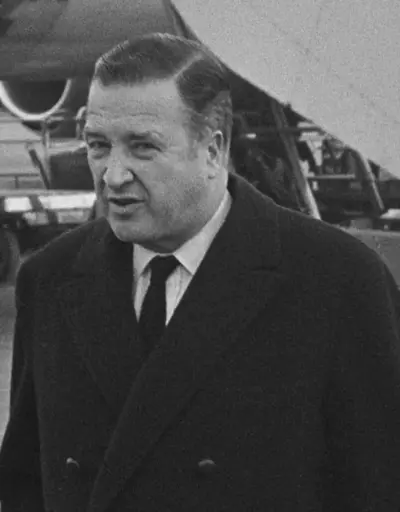
Henry Ford II, sometimes known as "HF2" or "Hank the Deuce", was an American businessman in the automotive industry. He was the eldest son of Edsel Ford and eldest grandson of Henry Ford. He was president of the Ford Motor Company from 1945 to 1960, chief executive officer (CEO) from 1945 to 1979, and chairman of the board of directors from 1960 to 1980. Under the leadership of Henry Ford II, Ford Motor Company became a publicly traded corporation in 1956. From 1943 to 1950, he also served as president of the Ford Foundation.
