Jennifer Granholm Quotes
The government assistance to the automobile industry was a tremendous success. The American auto industry was saved. Workers kept their jobs. The auto companies all have paid back their loans and they are all now profitable. If we had lost the auto industry, the industrial backbone of the country would have been destroyed. Steel, glass, rubber all would have collapsed.
In the Meltdown of 2008, the American Auto Companies were in dire straights and faced bankruptcy with no certainty that the industry could stay alive., They were running out of money and President Obama decided to make loans, take stock and control and force modernizing on the industry. As a result, and with some Toyota mismanagement, the companies returned to profitability and paid back their government loans early and as a result the bailout had not cost the taxpayers any money. Creditors however were outraged that the lost their preferred advantage had their been a bankruptcy.
Jennifer Granholm, Governor of Michigan (Democrat), C-SPAN, Book TV, December 3, 2011
Sourced by: Eigen's Political and Historical Quotations

He had already decided to save General Motors which was much larger and more critical to the national economy. The normal capitalistic broken down and there were no private firms that were willing to invest, control and continue the companies at any price. There were 1 million immediate jobs at stake with GM plus the collapse of the American Auto Industry including dealers and suppliers. With Chrysler, there were only 300,000 immediate jobs at stake. Ironically, one of the major reasons for trying to save both companies was the fact that Summers team had discovered that the companies were very badly managed. If the bailout could be leveraged to force radical management change and reform, the chances of success would have been much greater than if the companies had been well managed but were still losing money rapidly. The policy decision was brilliantly successful. The reformed auto companies quickly became profitable, and the taxpayer loans were paid back early with interest to and profits to the taxpayers. All those jobs and an iconic American industry not only were preserved but became very profitable and strong and in the final analysis, it did not cost the taxpayers even one dollar. Ford was in less trouble, but if the other two companies failed, the Ford suppliers would mostly fail, and Ford also would have gone down.

President George W. Bush had forestalled the Automobile Industry bankruptcy so that incoming President Obama could organize a rescue and reform of the industry. This was very effective and the industry was more profitable than ever in a few years. Romney however, had already changed his political persona from his previous moderate Republican to the hard right ideological base of the Republican party. In the election of 2012, he lost every Midwestern state whose economy was dependent on the auto industry, even though a number of them had elected Republican Governors and legislatures. This quotation was the subject of tens of thousands of pro-Obama campaign commercials. It made Romney’s last minute attempt to morph back to being a moderate seem silly in those Midwestern states.


The Chairman of the Federal Reserve Board, creatively found alternatives that the Fed had never used before and almost all experts did not even realize that were possible. He and Treasury Secretary Paulson, almost certainly saved the American system of capitalism. But in the process, they in the early stages and Bernanke throughout the crisis took a number of steps to save the system where the very people and companies whose actions had triggered the entire crisis seemed to personally benefit while most Americans were hurt badly and none of them received any immediate personal benefits the way the large bankers did. The amount of money that Bernanke and his Federal Reserve Board associates spend was staggeringly large and that too distressed many Americans. Almost all of the money was actually returned to the taxpayers as a result of the work of the Fed and the Treasury officials, but no one could feel good about the unfair disparity that had so benefitted much of Wall Street particularly and Main Street and the rest of American only generally while so many lost their jobs, their homes, their dignity and their hopes. Only the big banks and bankers also got a personal huge windfall of taxpayer money and took no risk for that. The alternative would have ruined everyone and even have been worse for the average citizen.

Steel workers were then paid $1.75 for a 9 hour day. This was earthshaking.


This is a statement that in the early 21st century would be made only by ultra liberals. But in the in the late 1940’s this was not only standard democratic party thinking, but a large number of Republicans thought of the Government as the employer of last resort including their Presidential standard bearer.


The President, like most Americans, was outraged at the immoral, insensitive, and incompetent behavior of the financial industry in the Meltdown of 2008. However, the President learned how dependent the economy of the entire country was dependent on having solvent banks and how vulnerable the entire nation was to major failures of the investment and regular banks. So he was faced with very poor options. The government could have nationalized the banks, but that would produce an economic system which in the long run would not be very sound. Of the banks could be allowed to fail or risk failure in which case the entire population would suffer. Or he could lend money to the banks to stabilize and strengthen them while the bank executives were paying themselves huge bonuses even though they performed so poorly. He chose the latter and Warren was typical of criticism he received from many of his supporters. Even though the banks had broken the law and forged documents and committed perjury in tens of thousands of mortgage foreclosures, the President, as a practical matter, could not even prosecute the bank officials who were responsible because there were thousands of bank and other company officials who had committed the same crime. The guilty included almost every senior officer of the major banks, and jailing all these people was deemed impractical. So, to recover the economy, justice and fairness suffered.

There are some conservative economists and businessmen who believe that it is desirable to have some unemployment as a bulwark against inflation. If there are people without jobs, they will hold the general wage rates down.

In the Great Recession, the industrial production had improved much by 2012—the 4th year of the Obama administration. However, technology and automation were displacing workers. At the time, the U. S. was producing the same amount as before the Great Recession only it was being done with 5 million fewer workers.

The Concorde was a French supersonic passenger plane that required a passenger fare of twice the normal fare in order to pay for the increased costs. The plane served an elite niche market but never captured enough of a market to sustain the program. Complicating the situation further, the sonic boom that could be heard on the ground when the Concorde flew over, made American communities reluctant to allow the plane to overfly their area. The result was that the U. S. would only grant permission for Concorde flights to land / take off from New York / Washington and Los Angeles / San Francisco where the approach would be over the ocean. Chicago, Dallas, Denver, Kansas City and other natural American markets were closed to the Concorde. As was the lucrative New York to Los Angeles market where the Concorde could have made the trip in under 3 hours. The French have attributed the Concorde failure to American policy which they claim was protection for Boeing and the domestic aircraft industry. When the Airbus program began in Europe, the United States objected to a variety of “illegal” subsidies that France, Germany and other EU governments were giving to Airbus contrary to the international trade rules. The Europeans countered by observing that the U. S. in effect subsidized Boeing via large military purchases without which the cost of the Boeing civilian plans would have been much greater. There has been a low level trade war over aircraft manufacturing from the beginning. See {634597} for some of the other reasons.

The practice worked fine in the Automobile industry, until there was intense competition from imported cars, and price increases were not easy to sustain and keep market share at the same time. When the automobile executives made some bad decisions, there was great conflict with the Unions who argued that it was the management that made the big mistakes and therefore the workers should not have to reduce their remuneration, and the automobile companies were caught in a death spiral where there costs were too high for the cars they made, the quality had slipped in an effort to save costs, and they did not make the smaller, low gas mileage cars that were in demand. The industry would have failed completely had it not been for the George W. Bush and Barack Obama administrations working together to bail out the American auto companies to the distress of many conservative ideologues in and out of Congress. See {637913} for a classic right wing ideological response to bailouts earlier.

This warning was a decade before the Meltdown of 2008, but was not heeded by any of the politicians. As a result a number of the companies that made all those risky decisions assumed that if something went terribly wrong the government would not let them fail. Unfortunately, they were right and the taxpayers spent billions to prevent companies from failing. After the meltdown all the politicians vowed to end the too big to fail concept, but while some improvements were made, the Congress could not come to agreement, and the markets and a number of companies think that they are still too big to fail. This is particularly true for Defense Contractors where the government has and probably will in the future, protect irresponsible companies from failure if they are the only company that makes needed weapons and other equipment.


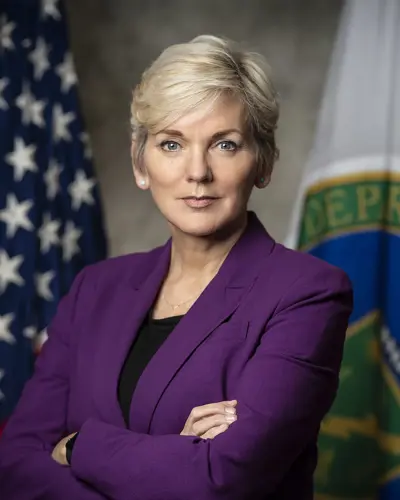
Jennifer Mulhern Granholm is a Canadian-American politician, lawyer, educator, author, and political commentator serving as the 16th United States secretary of energy. A member of the Democratic Party, she was the 47th governor of Michigan from 2003 to 2011. She was the first woman to serve as Michigan's governor, and she earlier served as attorney general of Michigan.
