Napoleon Bonaparte Quotes
Military despotism represses generous sentiments, priestly tyranny stifles them.
Bonaparte, Napoleon. The Maxims of Napoleon. Translated by J. A. Manning, Arthur L. Humphreys, 1903, p. 86.

Fremont and some of the Radical Republicans wanted Lincoln immediately to declare the slaves of the rebelling states free. As a major general in charge of an area, he wrote a military order emancipating all the slaves in his jurisdiction. President Lincoln countermanded the order as soon as he found out. He wanted Fremont to only free the slaves whose owners were actively working against the union. Lincoln needed to hold the border states like Maryland in the Union and was working on a plan whereby slave owners who were loyal to the Union would be economically compensated when their slaves were freed. If loyal slaveholders in Fremont’s area would lose their slaves with no compensation, Lincoln feared that the otherwise loyal border states would be driven to the confederacy thus shifting the balance of power. Lincoln had his own plan for emancipation and would not allow Fremont to alter that. As a result of this speech, the Radical Republicans nominated Fremont to run against Lincoln. For a few weeks he looked like he would run, but then he and Lincoln made a deal. Lincoln fired Montgomery Blair, Fremont’s arch enemy, from the cabinet, and Fremont withdrew from the election.


Fortunately for Turkey and the world, a great Turkish leader, Ataturk, rose up and radically reformed the nation and transformed it to a European style, secular democracy which became the most successful Muslim nation in the world but was under pressure by Ismalists to revert and have more religious control. Ataturk ended the Turkey that TR and others were criticizing.

The Fascists almost fulfilled Spengler’s prediction.

Referring to the Bureau of Alcohol, Tobacco and Firearms:
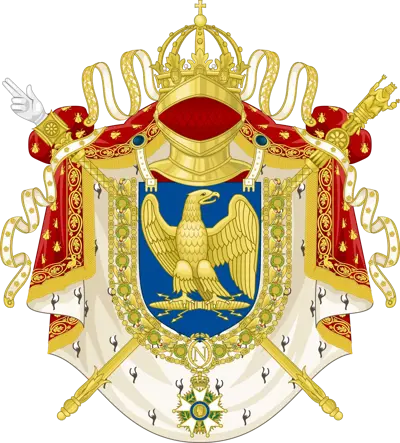
Napoléon Bonaparte was a French military and political leader of Corsican descent. He rose to prominence during the French Revolution and led several successful campaigns during the Revolutionary Wars. As Napoleon I, he was Emperor of the French from 1804 until 1814, and again in 1815. Napoleon dominated European and global affairs for more than a decade while leading France against a series of coalitions in the Napoleonic Wars. He won most of these wars and the vast majority of his battles, building a large empire that ruled over continental Europe before its final collapse in 1815. One of the greatest commanders in history, his wars and campaigns are studied at military schools worldwide. He remains one of the most celebrated and controversial political figures in human history.
