John Winthrop Quotes
Liberty is the proper end and object of authority, and cannot subsist without it; and it is liberty to that which is good, just, and honest.
Winthrop, John. The History of New England from 1630 to 1649. Edited by James Savage, vol. 2, Little, Brown and Company, 1853, p. 281.

Note that the two do NOT ALWAYS coincide. There are those who argue that law should be respected, right or wrong. There are also those who argue that law should be respected, only when it is in the right. Note also that “respect” and “obedience” are two different things. Some people argue that law and the courts and government must have respect. Others that they are only due obedience but not necessarily respect when they are in the wrong. Still others, like Thoreau, that obedience even is not required when the law is wrong. There are those who take this to the degree that obedience to a “wrong” law is wrong and there is a DUTY to disobey a wrong law. However, a more nuanced view does not treat all laws as the same importance. I may think a particular tax is unjust and wrong, but obedience does not necessarily have moral consequences. A law that says that people with a certain religion must not be hired, however, is sufficiently immoral that I am obliged to disobey it.


Muir was tried and convicted for sedition for his speech, and at his trial in August 1793 he repeated the quotation claiming that it was not seditious. He was advocating extending the vote to male, non-land owners. See Robert MacQueen Braxfield.


Although not particularly noticed at the time, FDR was the first person to use the term, “Human Rights” which is today in all our vocabularies.


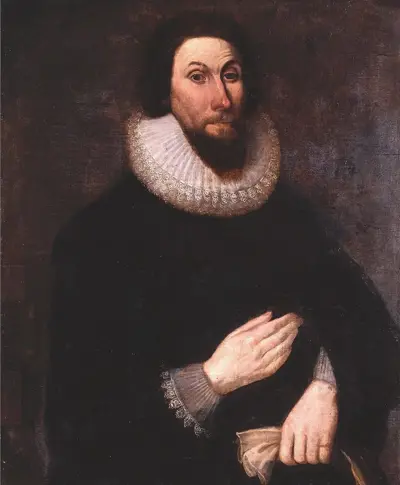
John Winthrop was an English Puritan lawyer and one of the leading figures in founding the Massachusetts Bay Colony, the second major settlement in New England following Plymouth Colony. Winthrop led the first large wave of colonists from England in 1630 and served as governor for 12 of the colony's first 20 years. His writings and vision of the colony as a Puritan "city upon a hill" dominated New England colonial development, influencing the governments and religions of neighboring colonies.
