Octave Chanute Quotes
Let us hope that the advent of a successful flying machine, now only dimly foreseen and nevertheless thought to be possible, will bring nothing but good into the world; that it shall abridge distance, make all parts of the globe accessible, bring men into closer relation with each other, advance civilization, and hasten the promised era in which there shall be nothing but peace and goodwill among all men.
He was trying to develop an airplane the decade before the Wright Brothers succeeded. However their work did not emerge out of thin air. They had read Chanute’s reports and credit him with a number of their ideas. Chanute, like the Wright Brothers and oither early air pioneers were optimists about the utility of the airplane as well as its feasibility.
Octave Chanute, 1832-1910, French Engineer & Early Airplane Developer, Progress in Flying Machines, 1894
Sourced by: Eigen's Political and Historical Quotations

He was totally wrong. This quotation is important because the cultural and practical value of new science or technology is often very unclear to the scientists and inventors themselves. Until humans start to integrate the science and use the technology, the cultural, ethical, and political patterns of usage are not easily predicted. Humans are the unpredictable elements of the system.

Cayley developed the first gliders and envisioned air travel at the same time that Thomas Jefferson was President.


Mother Shipton made a series of unusually accurate predictions, published throughout England, including the Great Plague of London, the Spanish Armada, & the Great Fire of London. Be wary of this particular quotation as while it may be a remarkable prediction, it also may well be a forgery.

Such a proposal was first made in America in 1792. See Benjamin Banneker.


His father, Henry Ford, did not agree that the Airplane would be so important, but the son’s vision made Ford the largest airplane manufacturer in America.


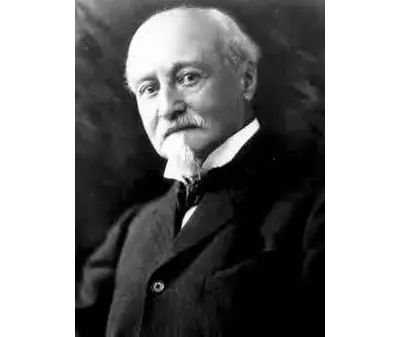
Octave Chanute was a French-American civil engineer and aviation pioneer. He provided many budding enthusiasts, including the Wright brothers, with help and advice, and helped to publicize their flying experiments. At his death he was hailed as the father of aviation and the initial concepts of the heavier-than-air flying machine.
