Greg Grandin Quotes
Kissinger's unusually high body count and singular moral imperiousness has the effect, among his critics, of obscuring his didactic utility. An outsized personality who has committed outsized mayhem, Kissinger eclipses his own context. Yet, as animals were to the anthropologist Claude Levi-Strauss, Kissinger is good to think with.
Grandin, Greg. Kissinger's Shadow: The Long Reach of America's Most Controversial Statesman. Metropolitan Books, 2015.


He argued to take every statement or threat of violence against America or Americans made by a foreign leader, even if for local political purposes, as a clear and present danger that requires action, often including force to nullify that country's capability to harm America or to produce a regime change. Many point to Adolf Hitler who had, in Mein Kampf, told the world what he would try and do, and few paid any attention to him. On the other hand, when he was at his most dangerous and planning massive world aggression, his rhetoric was very moderate and peaceful. The vast majority of the foreign leaders who threaten America and her interests, never have acted on those threats. However, one danger is the incitement of others in the country or region who might become a threat to America as an individual or a non state terror group.


This is a view with which most diplomats and foreign policy strategist do not agree. They point to Hitler in WWII where Nazi Germany had enormous power but brought themselves to ruin via terrible strategic decisions that Hitler made. Declaring war on the United States, Invading Russia, and not developing nuclear weapons are 3 of the worst. Many argue that the United States strategy in invading Iraq and diverting resources from Afghanistan was a poor strategic decision.

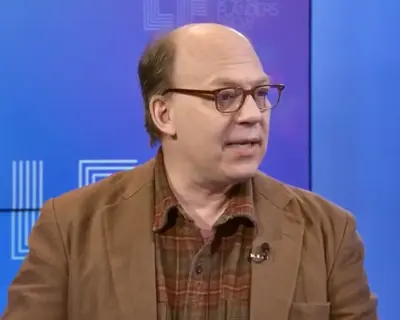
Greg Grandin (born 1962) is a professor of history at Yale University. He previously taught at New York University. He is author of a number of books, including Fordlândia: The Rise and Fall of Henry Ford's Forgotten Jungle City, which was a finalist for the Pulitzer Prize for History, as well as for the National Book Award and a National Book Critics Circle Award. A more recent book, entitled, Who Is Rigoberta Menchú?, focuses on the treatment of the Guatemalan Nobel Peace Prize winner. His 2014 book, The Empire of Necessity: Slavery, Freedom, and Deception in the New World, is a study of the factual basis for the novella Benito Cereno by Herman Melville.
