Karl Barth Quotes
Jews have God's promise and if we Christians have it, too, then it is only as those chosen with them, as guests in their house, that we are new wood grafted onto their tree.
Barth, Karl. Dogmatics in Outline. Translated by G.T. Thomson, SCM Press, 1949, p. 74.


Kennedy had never been at the left wiing of the Democratic Party. His father, Joseph Kennedy, was known to all Irish Catholic politicans and disliked by most. He had supported big finance and business and was no great friend of labor. He was fired by FDR for publicly supporting Hitler before WWII and urging non support of England. He badmouthed FDR and Eleanor Roosevelt--Democratic icons. President Truman had to be stopped by a Secret Service agent from throwing the elder Kennedy out the window of a Boston hotel. He was a nasty man who threw his money around. But Senator Kennedy himself had never said a word criticizing Joeseph McCarthy or comdemning McCarthism and his other exceses leaving the criticism to other Democrats and even Republicans. (His silence was at the advice of his father.) Ribicoff a strong liberal knew Kennedy well and felt that Kennedy would not be constrained by his father's views, and that Kennedy was a true liberal at heart and would demonstrate that if elected President.


This was his response when asked if he would inform the police of another suicide bombing mission by Islamic terrorists.


Watchtower Bible and Tract Society of New York

The Roman Empire of 70 million people contained at the time 7 million Jews—the vast majority of the world’s Jews.

Locke wrote the Charter of South Carolina in which any 7 people could assemble and form a church including:


“Goyim” is the Hebrew and Yiddish word for non-Jews. In early Christianity, all Christians were Jews. Christianity was a new form of Judaism. The Last Supper was the Jewish Passover which was observed by all the early Christians who followed all the Jewish laws. Even goyim who wanted to convert to Christianity in the early days were converting to Judiasm and following the teachings of the famous Rabbi, Jesus. Later, St.Paul, allowed some goyim conversion without maintaining the Jewish dietary laws and without males having to be circumcised. The two religions split thereafter, but for many Jews of the time, especially the followers of Jesus, one of the Jewish obligations was to bring light to the goyim. The Cardinal was born of Jewish parents and converted, but just as the disciples of Christ considered themselves Jews so always did Lustiger.

Parton observed that the United States, by giving legal rights to Jews, set an example which improved the condition of Jews in many countries of Europe. There was much personal Anti Semitism in America then, but there was little difficulty for Jews in dealing and interacting with the government. America’s very existence and success since Independence was observed by much of Europe, and many tended to emulate the United States in some things. For many Europeans, the fact that Jews could be given all the rights of citizenship and nothing adverse was caused by that was the first time they had ever seen what their old cultures had feared for generations. The Papal States and Russia were as officially anti-Semitic as in the past while Sweden had recently given Jews full rights as citizens just as in the United States.


At the time Turkey was the only Muslim majority country where there was coexistence with secularism but with Christians and Jews as well. Ataturk, the great Turkish leader, turned Turkey around, modernized it, Westernized it, and made it a secular state with freedom of Religion, much like the United States. However, Erdogan’s party was constantly trying to make the state more Islamic as his electoral base were the poor, religious, Muslims.

Many, if not most, non-Muslim scholars and thinkers very much disagree with Hamid on this point. The great exceptions of Islam are almost 1,000 years in the past. Current Islam, they argue, is not more exceptional than the beliefs of modern Mongolia which dominated most of the known world centuries ago, but has little that deserves special respect in the 21st country beyond the general respect which is owed to all religions and nationalities. With the exception of Turkey, Islamic nations are for the most part, backward, and virtually no other non-Muslim nations try to emulate them in any way.


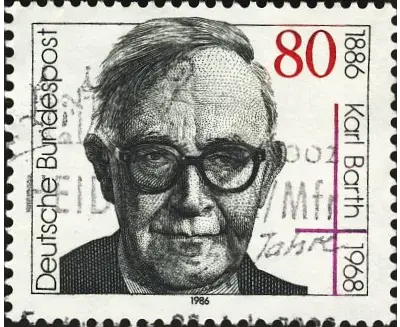
Karl Barth (/bɑːrt, bɑːrθ/; German: [bart]; 10 December 1968) was a Swiss Reformed theologian who is most well known for his landmark commentary The Epistle to the Romans (1921), his involvement in the Confessing Church, and authorship of the Barmen Declaration, and especially his unfinished five-volume theological summa the Church Dogmatics (published in twelve part-volumes between 1932–1967). Barth's influence expanded well beyond the academic realm to mainstream culture, leading him to be featured on the cover of Time on 20 April 1962.
