John Locke Quotes
... Jews, heathens, and other dissenters.
Locke wrote the Charter of South Carolina in which any 7 people could assemble and form a church including:
John Locke, 1632-1704, English Political Philosopher, Charter of South Carolina
Sourced by: Eigen's Political and Historical Quotations


While not in the Koran, this attributed statement is the basis for the ban on non-Muslims going on a Hajj and going to the most holy Muslim places—Mecca, Mina, Muzdalifa, and Arafat as well as the anti-religious hostility to all religions but Islam which is present in some Muslim countries.


Samuel Langhorne Clemens, 1835-1910

In one of the historical ironies of the 12th century, a Christian sect preferred the rule of the Muslims than their Christian brethren—on the grounds of religious tolerance. It illustrates the changes that take place over time. By the 21st century, it was the Christians who were thought of as tolerant and the Muslims as the opposite.
The place of non-Muslims in an Islamic country, if any, has been a point of great anxiety among Christians, Jews, Bhais, and others. These have been persecuted and expelled from numerous Islamic countries while in others such as modern Turkey there is no problem. This particular cleric is seen as more “modern” and “liberal” than most. Even he has little concept of equality and freedom of religion.


France, like the other European nations had suffered through the bloodbaths and civil and other wars including the Protestant Reformation, the Holocaust and others. They. like the Untied States chose a separation of church and state—a secular government to combat the inner and intrareligious bloodbaths that have historically killed millions.

He is a Greek Orthodox Christian, and he correctly observes that the Islamic world was considerably more tolerant than the Christian until the 18th century when Islam had become less tolerant in the Middle East while the Christians were modernizing and going through a cultural and intellectual enlightenment and societal modernization while the Muslims, became less tolerant than they were in earlier years leading to the modern situation.
His protest was focused on Middle East policies which he believed did not value the lives of Muslims as highly as Christians and Jews. The irony of this protest is that United States policy claims to value all life equally as do virtually all industrialized democracies. Omeish however is unusual among world Islamic leaders and politicians in that he values Christian and Jewish life as much as Muslim. Most, typically value Muslims almost exclusively and many advocate the killing of Christians and Jews.


Henry of Navarre
The Jews, Christians and Zoroastrians were allowed to maintain their own religion and live as 2nd class citizens and pay a special tax, but ALL other religions were to be forced to convert.
Toleration is a relative term. The Muslim Moors made Christians (and Jews) pay a special tax. At times they were forced to wear special clothing so that they could be readily identified. And they could not build churches larger or taller than the smallest mosque in the community. At times, their occupations were restricted but at other times Christians and Jews were appointed to the highest positions like Vizier. The Inquisition, in contrast, forced all Muslims (and Jews) to leave the country without any of their property or money or be tortured and killed—usually by burning at the stake unless of course that they converted to Christianity.

This was the beginning of the inquisition.
The Governor of New Amsterdam, Peter Stuyvesant, was a bigoted Protestant of the Dutch Orthodox church and did not want to allow non-Protestants into the Colony, However, he was overruled by the Directors of the Dutch West India Company which rolled the colony designed to be a money making enterprise. Jews and others were allowed to enter and become citizens, however while they could worship in any way they chose in their own homes, they could not build any places of worship of have any public prayer of other aspects of their religion. This was the hypocrisy to which Bangs refers. However, at the time, it was more liberality and tolerance than most of the Christian world.


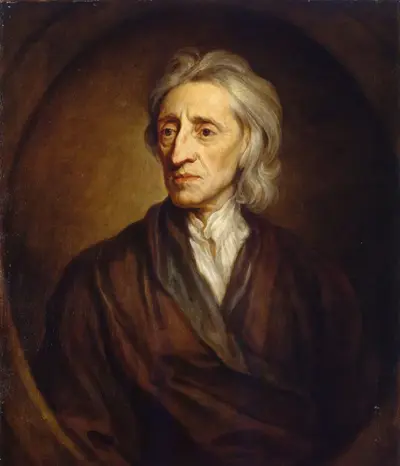
John Locke FRS was an English philosopher and physician, widely regarded as one of the most influential of Enlightenment thinkers and commonly known as the "Father of Liberalism". Considered one of the first of the British empiricists, following the tradition of Sir Francis Bacon, Locke is equally important to social contract theory. His work greatly affected the development of epistemology and political philosophy. His writings influenced Voltaire and Jean-Jacques Rousseau, and many Scottish Enlightenment thinkers, as well as the American Revolutionaries. His contributions to classical republicanism and liberal theory are reflected in the United States Declaration of Independence.
