William Augustus Cumberland Quotes
Jacobite rebellious spirit is so rooted in the nation’s mind that this generation must be pretty well wore out before this country will be quiet.
Duke of Cumberland
William Augustus Cumberland, 1721-1765, British General, English military governor of Scotland during the Jacobite Rebellion, Letter to the Prime Minister, 1746
Sourced by: Eigen's Political and Historical Quotations


For his seditious activities he was sentenced to penal servitude for life. He escaped and came to America where he entered politics

China had learned to grow new crops from the Americas and their greater ability to produce food led to large population growth which was straining the other national resources and the economy, technology and government could not handle the growth, producing much unhappiness and discontent.


The Empress had earlier decided not to try and suppress the Boxers when they started attacking foreigners--{641838}. But now things had gotten out of hand and many ordinary Chinese people—especially Chinese Christians-- were suffering Boxer abuse. Cixi thought the government had to “ally” with the Boxers in the hope that she could influence directions in the future. This, of course, made her anathema in the West and forever damaged her reputation and legacy in Western history.
In the history of America


Darwin was then a very young man, who had personal witnessed the slavery in South America and the Caribbean when he was on his famous expedition on HMS Beagle. See {630961} & {630962}. He was so disgusted with slavery that he hoped there would be armed slave revolutions and takeovers as had occurred in Haiti. Many of the English upper classes were radical when it came to slavery.


He was addressing the Conservatives of Ulster, the Northern Ireland province that was the center of the Orangemen movement of Irish Protestants who were fighting to retain 'Protestant Ascendency' -- which was the social, political and cultural domination of the Protestants (the minority) over the Catholics (the majority). This was best achieved by keeping Ireland a part of Great Britain as opposed to having Ireland as a separate, independent country.
the Dutch monarchy supported by England The French fear of course was that the revolutionary fervor spreading to the bourgeois could easily spread to France, and that is exactly what happened 4 years later. See {639769} for more of his view on the Dutch revolutionary spirit that might infect France.


He was acting as French Foreign Secretary at the time.


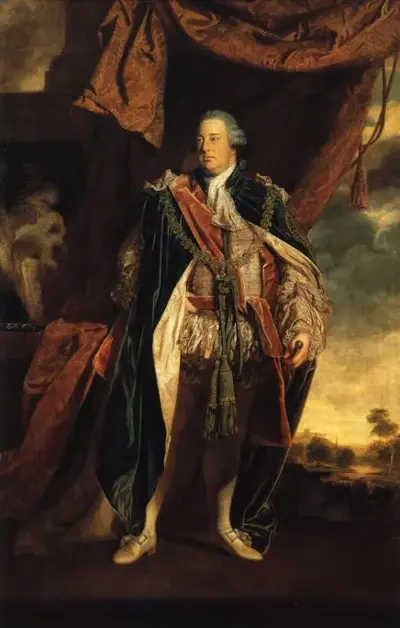
Prince William Augustus, Duke of Cumberland, KG, KB, FRS was the third and youngest son of King George II of Great Britain and Ireland and his wife, Caroline of Ansbach. He was Duke of Cumberland from 1726. He is best remembered for his role in putting down the Jacobite Rising at the Battle of Culloden in 1746, which made him immensely popular throughout parts of Britain. He is often referred to by the nickname given to him by his Tory opponents: 'Butcher' Cumberland. Despite his triumph at Culloden, he had a largely unsuccessful military career. Between 1748 and 1755 he attempted to enact a series of army reforms that were resisted by the opposition and by the army itself. Following the Convention of Klosterzeven in 1757, he never again held active military command and switched his attentions to politics and horse racing.
