John McCain Quotes
I've always given presidents the benefit of the doubt on their nominees.
McCain, John. Interview by Chuck Todd. Meet the Press, NBC, 2017.


Alberto Gonzalez, White House Counsel and later Attorney General who was forced to resign and David S. Addington, Counsel to the Vice President, had come up with a novel view of the powers of the presidency. They argued that since the President is the Commander in Chief, in a war situation or intelligence gathering thereto, has the Constitutional responsibility for that function, he need not obey any laws of Congress as in the conduct of the war Congress would be impinging on the Constitutional separation of powers which itself was prohibited by the Constitution. The argument did not find any significant legal support but for a while the George W. Bush White House behaved as if this were the law, despite the fact that even in the American Revolution and the War of 1812 Congress passed laws regulating the conduct of the armed forces as is provided for in other parts of the Constitution. Yet even Goldsmith would allow the President some powers that many think are unconstitutional and/or belong to Congress. See {32436}.


That is one view—the one tried the most frequently by Presidents who by their own estimates didn’t get a responsive civil service working to his priorities. Presidents like Teddy Roosevelt, Franklin Roosevelt, and Dwight Eisenhower and Lyndon Johnson had great cooperation from their civil servants; they instead appointed very competent people with strong senses of fairness and leading personnel. Ronald Regan tried both techniques. He used Wilson’s technique in his Education and Justice Department where there was slow-rolling and dissonance when his appointees tended to be ideologues with little or no outstanding professional competence in the fields they supervised. However, his military and State Department bureaucracies was very responsive to his appointees who were excellent leaders.


He was Chief of Staff and was trying to calm the nation. However, he created a real problem. By saying he was in control, he alarmed many people as the Constitution did not give him any authority to be in control of anything. Many people saw this as a sign of his extreme personal ambition. Others, that he had just made a mistake.


The Republican controlled Senate whose Judiciary Committee and voted overwhelmingly for the President’s nominee for Attorney General, Loretta Lynch, but the Senate Republicans refused to the nomination up for a vote unless the Democrats and the President would agree to add an abortion ban on money that was to be appropriated for assistance to trafficked and sexually exploited women and girls. Never before had a nomination like this have been subject to this type of blackmail over terms of legislation on a matter that had nothing to do with the nominee or the cabinet position. However, this was the time one of the extreme periods of hyper partisanship in American History.


During the Korean War Secretary of State John Foster Dulles sent instructions to the United Nations Ambassador as to how to vote in a UN debate. Lodge voted to the contrary. The Assistant Secretary of State called to inquire why the instructions were not followed.
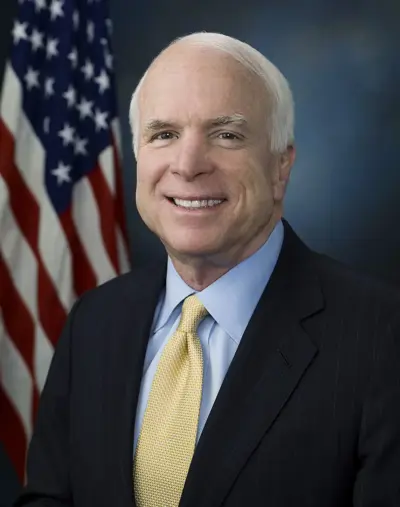
John Sidney McCain III was an American politician, statesman and United States Navy officer who served as a United States Senator for Arizona from 1987 until his death in 2018. He previously served two terms in the United States House of Representatives and was the Republican nominee for president of the United States in the 2008 election, which he lost to Barack Obama.
