Karen Armstrong Quotes
It was conceptually impossible before the year 1700, about, for anybody in the world to say when religion began and politics ended.
For most of human history, religion and politics were totally intermingled. It was so even in the democracy of ancient Greece.
Karen Armstrong, Writer and Historian, Interview on WNYC Radio, Quoted in New York Times Book Review, December 21, 2014
Sourced by: Eigen's Political and Historical Quotations


Gabriel exaggerates in the sense that while the quotation is correct for many Muslims, it is by no means true of all. Iran for example is an Islamic theocracy, but Turkey is a 99 percent Muslim nation which is totally secular and in some ways is much more restrictive of Islamic teaching and practice than most secular democracies. The fundamentalist Muslim view of the state and religion is essentially the same as the ultra orthodox Jews and Christians. It is true that a greater proportion of Muslims believe in the merging of civil and religious law than Jews and Christians, but by no means all. The non Arab Muslims are much less likely to see the unity of state and religion.


Bangladesh had fared very poorly as a part of Pakistan. When it revolted and became independent, it adopted a secular government whereas Pakistan had been, and is, a heavily Islamic state. However, the vast majority of Bengalis were Muslim and some were extreme fundamentalists. Rahman was under constant pressure to make the government more “Islamic” and while he did so somewhat, he tried to advocate for separation of church and state. Bangladesh is not as extreme as Pakistan which is not yet a theocracy but religious forces dominate every aspect of the society.


The State of New Jersey reimbursed parents of public and private school children when the children took public transportation to school. Parents of religious school children wanted the same reimbursement. The Court would not allow that. The vote was 5-4.
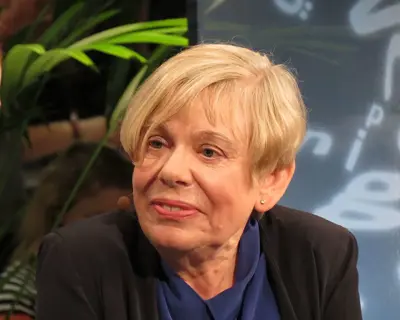
Karen Armstrong OBE FRSL is a British author and commentator of Irish Catholic descent known for her books on comparative religion. A former Roman Catholic religious sister, she went from a conservative to a more liberal and mystical Christian faith. She attended St Anne's College, Oxford, while in the convent and majored in English. She left the convent in 1969. Her work focuses on commonalities of the major religions, such as the importance of compassion and the Golden Rule.
