Edmund Burke Quotes
Politics and the pulpit are terms that have little agreement … The cause of civil liberty and civil government gains as little as that of religion by this confusion of duties.
Edmund Burke, 1729-1797, Irish Orator & Member of the British Parliament, Reflections on the Revolution in France, 1790
Sourced by: Eigen's Political and Historical Quotations


Responding to criticisms by Rev. Jerry Falwell about America's moral decline: See also, Mark Russell


Bishop Ames had been appointed by the war department to take charge of all the Christian churches in the Southern states as they were defeated. The reason is that most Southern clerics were advocates of the rebellion. However many Northern churches, especially those in border states also contained ministers who were not only preaching treason but also aiding the Southern cause. The President thought that the War Department’s order gave Ames authority over all churches where the minister aided the rebellion. So he wrote to Ames limiting the authority. After the President was assured that Ames authority would only extend to Southern churches that had been in the rebellion, Lincoln allowed Ames to appoint ministers and control churches. This is the only time in American history that the Federal government actually controlled churches directly.


Carter was personally one of the most religious of our Presidents.

The same phrase was used by Count de Montalembert at a Catholic conference in Malines, August 20, 1863, and is sometimes attributed to him.

In 1858 the Catholic Church virtually controlled much of the Mexican state, owned much of the land, and was opposed to all notions of separation of church and state. At that time in the “War of Reform” vast changes began abolishing ecclesiastical courts, barring church land ownership, and eventually prohibiting churches from running schools and clerics from criticizing the government.


This is a critical quotation on the government establishment of religion issue. There are a few people who have argued over the years that the Founding Fathers and their culture was religious and where they were careful to avoid favoring one religion over another, they did NOT intend to put atheism on the same equal plane as religion as far as government action is concerned. However, some of the Founding Fathers were atheists, and some others like John Adams were deists—they believed in a God but not in the Trinity or in Judaism or any organized religion. So this quotation makes it clear that the First Amendment does NOT favor religion over non religion or secularism. Atheism must be on an equal footing but not on a higher plane.
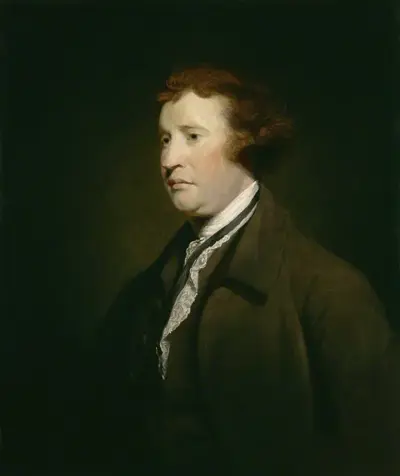
Edmund Burke was an Irish statesman, economist, and philosopher. Born in Dublin, Burke served as a member of parliament (MP) between 1766 and 1794 in the House of Commons of Great Britain with the Whig Party after moving to London in 1750.
