Gerald of Wales Quotes
It was a common vice of the English, when they were reduced to poverty, that rather than endure it patiently, they exposed their own children to sale.
Gerald of Wales, Welsh Cleric and Historian, c. 1146–1223, Ambassador to Wales and Co-Regent Representing English King Henry II, History of the Conquest of Ireland, c. 1189
Sourced by: Eigen's Political and Historical Quotations


Indian and Black slaves were outlawed very early in Connecticut, not on moral grounds of concern for the Indians and Blacks, but because of the negative effects on the white poor. Why would anyone pay the poor any more than the amortization costs of a slave? Therefore there was no way a poor white could make a living wage if slavery were to coexist.


Clark, after becoming one of the richest men in America, wanted to go into National Politics, but most people hated him so he could never win elected office. At the time, Montana selected their Senators by a vote of the State Legislature. So Clark bribed enough members of the legislature to become the Senator. However, the bribery scheme became a public scandal and the Senate refused to seat him. So the legislature had another vote in the next legislative session and Clark won again, and that time no one had the evidence of the bribes. But then, more about Clark became known, and he just served the one term.

Oastler was a mill owner himself.

Debs had unconstitutionally been arrested and jailed for opposing American entry into World War I. He was later pardoned by President Warren G. Harding.


This was written under the name of Ragnar Redbeard. There are a few scholars who believe that it was written by Jack London, but most credit Desmond.

His voyage took him to several slave countries where his anti-slavery views were challenged by locals.
Many historians of higher education to not agree with Wilder’s overall generality. However, it was certainly the case that slavery was a major factor in generating the funds for some early universities in the North, but others were “hotbeds” of abolition from their very inception.


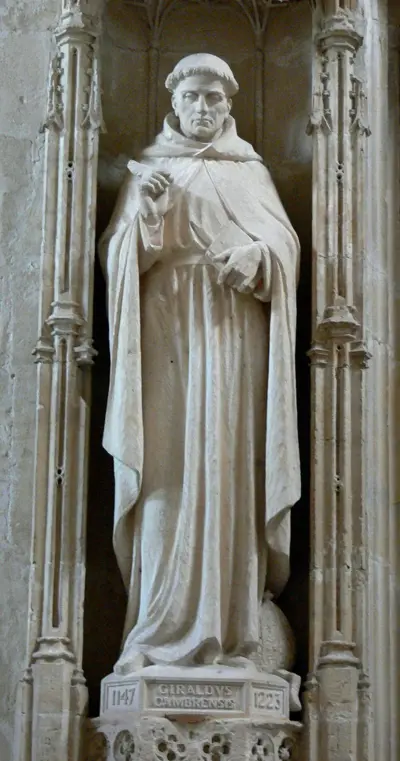
Gerald of Wales was a Cambro-Norman archdeacon of Brecon and historian. As a royal clerk to the king and two archbishops, he travelled widely and wrote extensively. He studied and taught in France and visited Rome several times, meeting the Pope. He was nominated for several bishoprics but turned them down in the hope of becoming Bishop of St Davids, but was unsuccessful despite considerable support. His final post was as Archdeacon of Brecon, from which he retired to academic study for the remainder of his life. Much of his writing survives.
