Elizabeth I Quotes
it shall not be lawful for any person of or under her highness's obedience … to send his or her child, or other person, being under his or her government, into any the parts beyond the seas out of her highness's obedience, without the special license of her majesty, or of four of her highness's privy council
The object was to prevent Catholic sympathizers to send their children to school or for other purpose to Catholic countries where they might be enlisted in efforts to destabilize the Protestant English realm.
Elizabeth I, 1533-1603, Queen of England, An Act Against Jesuits and Seminarists, 1585
Sourced by: Eigen's Political and Historical Quotations


With all the rights of Englishmen from Magna Carta on down, the right of emigration did not appear until modern times.

What the historian did not know was how similarly the Protestants would behave against the Catholics when they had the power. Since the Catholics were the established church, and the Protestants the new “heretics” the Protestants were on the receiving end of most of the atrocities at the beginning. However, as if they had been scholled by their horrible experiences, they repeated them just exchanging the perpetrators and the victims.

motivates him as opposed to a plot He had entered the Catholic cathedral in Lisbon, and in the middle of the mass, wrested the host away from the bishop and trampled it on the ground. The Catholics thought that the Protestant English were about to launch a plot to establish a reformed church in Portugal. They arrested all Englishmen in Portugal. Finally, after much torture, the decision was reached that Gardener acted on his own, and he was roasted alive.
Henry of Navarre. The practice of kidnapping children from parents of the other faith and baptizing them was rampant.

The Protestants had been given the right to practice their religion free from harm by the King’s grandfather. See {617664}. The inter-religious animosity continued and the Catholics again tried to make France an exclusively Catholic country.

Protestant ascendancy was the policy of keeping Protestants dominant while allowing Catholics to worship but to be politically, socially, and economically subservient to the Protestants.


England had, under Henry VIII, left the Roman Catholic Church where the King replaced the Pope as head of the English Church. Henry’s successors then had to organize and manage the national Christian church. James was discussing the hierarchy of the Church of England and there was a suggestion that Bishops be eliminated and have every priest directly responsible to the crown. Bishops would be powerful figures who might form a power center. (They did later). However, King James I observed that the King is God’s choice and rules by divine right. So there had to be bishops to crown kings. The bishoprics were retained.

For the majority of the time of Christian History, it has been Catholic Christian History. Protestantism did not begin until the 16th Century.


Physiologically a very young girl is often capable of getting pregnant, but physiologically is not able to bear children without high risk to both children. A similar risk pattern exists with women over the age of 40. While there are a number of Islamic countries that do sanction pedophilia within marriage, there is nothing inherent in Islamic theology that justifies this. Modern Islamic nations like Turkey and other Muslim majority nations do not allow marriage at such a young age. Also, it was not to long ago, in historical time, that Christian nations also sanctioned marriage to very young girls.

1st Earl of Beaconsfield. This is one of the favorite quotations of those who oppose a strong federal role in education.

Virtually every advance for the working class in England (and the other countries including America) was labeled “socialism” by the conservative economic factions of the time. However, socialists were strong advocates of all these economic reforms and even in the 19th century their impact was recognized.


In 17th century England the Puritans were major opponents of the Celebration of Christmas which at the time had been celebrated mostly by Roman Catholics.
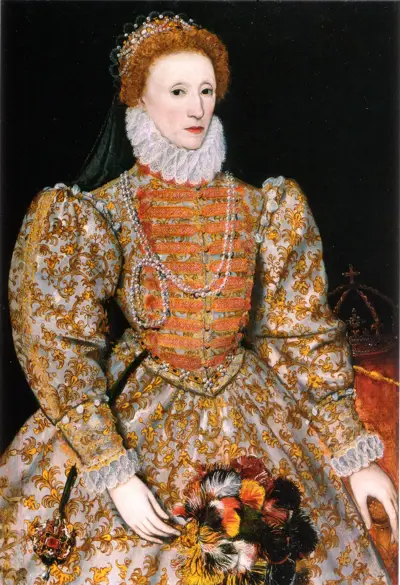
Elizabeth I was Queen of England and Ireland from 17 November 1558 until her death in 1603. Sometimes called the Virgin Queen, Gloriana or Good Queen Bess, Elizabeth was the last of the five monarchs of the House of Tudor.
