Martin Luther Quotes
It is not I that smite, stab, and slay, but God and my prince, for my hand and my body are now their servants.
Luther, Martin. Luther's Works, Vol. 46: The Christian in Society III. Edited by Robert C. Schultz, Fortress Press, 1967, p. 96.

Sometimes referred to as Gaspar de Toledo. This quotation Illustrates one of the ways that Churches maintained power over the secular government even though they were supposedly separate. By maintaining control over the secular leaders consciences and sense of morality, the Church could control the secular government. In this particular historical case, there was not even a supposed separation. The Confessor had an ex officio role in the high council. See {629457}.


This Biblical quotation has been used for more than a thousand years by Christian authorities, civil and religious, to induce obedience to the existing authority and suppress revolution.
William the Conqueror. See Henry of Huntington for another similar description of the King's authority.


This sura is seen as a limit on power of a ruler.
A companion of the Prophet named Hudhayfah asked the Prophet about what the future holds for the Muslims. The Prophet replied:


The fire turned out to be The Great Fire of London which burned most of the city to the ground. Bludworth’s inaction and indecision are blamed as one of the reasons the fire got out of control.
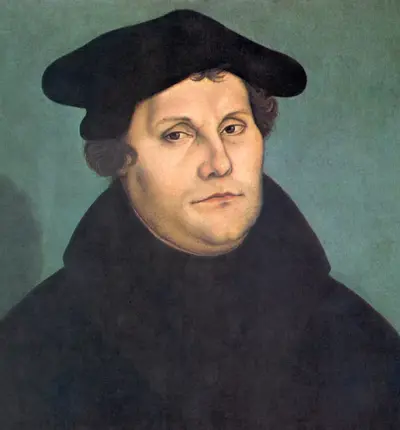
Martin Luther, O.S.A. was a German professor of theology, priest, author, composer, Augustinian monk, and a seminal figure in the Reformation. Luther was ordained to the priesthood in 1507. He came to reject several teachings and practices of the Roman Catholic Church; in particular, he disputed the view on indulgences. Luther proposed an academic discussion of the practice and efficacy of indulgences in his Ninety-five Theses of 1517. His refusal to renounce all of his writings at the demand of Pope Leo X in 1520 and the Holy Roman Emperor Charles V at the Diet of Worms in 1521 resulted in his excommunication by the pope and condemnation as an outlaw by the Holy Roman Emperor.
