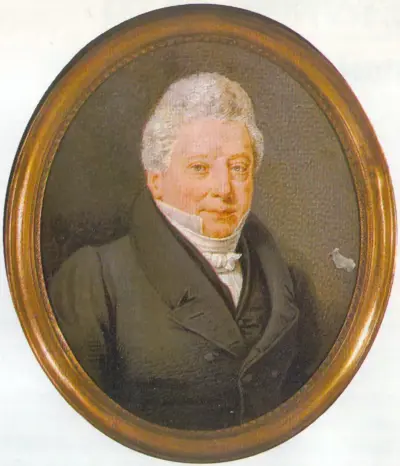
Cornelis Felix van Maanen Quotes
It is impossible, financially and politically, to lower expenditure to the level of our revenues in the calamitous times in which we live, and so, however painful and afflicting the idea may be, we must exist from day to day and simply await the outcome of events yet in the making …
The Dutch King’s brother, Emperor Napoleon Bonaparte Bonaparte, insisted on Dutch contributions to his war effort in the way of Dutch troops, ships and provisions. Yet there was not enough possible revenue to pay for such a war effort.
Cornelis Felix van Maanen, 1769–1849, Minister of Justice of Holland, Warning after his resignation, 1809
Sourced by: Eigen's Political and Historical Quotations

The Dutch King’s brother, Emperor Napoleon Bonaparte Bonaparte, insisted on Dutch contributions to his war effort in the way of Dutch troops, ships and provisions. Yet there was not enough possible revenue to pay for such a war effort. Gogel was able to introduce efficiencies in many areas but still more taxes were needed. War expenditures took all the resources of the state and progress stopped and the kingdom was almost destroyed by the economic crisis.


The country was in a terrible recession and McKinley and other politicians of the time did not know about or understand the use of a counter-cyclical policy of government stimulus. With the economy devastated and the main revenue for the Federal Government coming only from import customs duty, the Federal coffers were emptying rapidly. Retrenchment was the only possible step that was then known.


She was very extravagant in her living style at a time when the country was in deep financial straights. Resentment of this was one of the causes of the French Revolution.


The speech was actually drafted by Peter Jay, his son-in-law and a journalist. The leader of the left-wing Labour party, to the surprise and anger of many of the party stalwarts, was repudiating Keynesianism which had been basic to the party for years. This appears to be the first specific statement that a government cannot spend its way out of a recession. Conservatives have used it ever since in countries throughout the world. The truth of the Keynes proscription is in constant modern economic and political debate with no resolution likely soon.


Although the Professor was often right about this technique, at the time he made this statement, the Clinton administration was actually cutting spending and using much of the revenue to pay for the deficit—just the opposite of what the Professor was worried about. It was successful and the deficit was eliminated and surpluses were projected. However the succeeding administration more closely followed the professor’s pattern and increased spending enormously for serious needs, but also cut taxes, so that we went during the Bush administration from the largest projected surplus in American history to the greatest deficit in American history.