Thomas Paine Quotes
It is easy to see that when republican virtue fails, slavery ensues.


This quotation is a great demonstration of how much wiser and the better politician of all the crowned heads of Europe that Queen Victoria was. There were stirrings of freedom and desire for parliamentary government throughout Europe. Queen Victoria, even though and perhaps because she was a young woman, had a great feel for fairness and reasonableness and had read a great deal of history. There were some radical red socialists calling for complete radical revolution scaring European Royalty profoundly. They reacted very conservatively and with reaction, reverting to more tyrannical practices of the past urged in that path by very conservative, right wing advisors. Victoria also had little respect for some of the monarchs who had little interest in their people and much with their personal power and wealth. In the end, it was England which was the only nation which never had a serious radical socialist / communist threat, and that had much to do with Victoria’s political acumen and wisdom.


This is a very important quotation because it illustrates a characteristic of most South American (and many other world) cultures. Namely, that respect and dignity are more important than freedom. There is even a Spanish term conveying the importance of respect: Respecto! This is very different from the Anglo-American tradition where if one has freedom, he is little concerned with what others think of him, and no amount of respect would offset the loss of freedom. The person who is free, has the dignity that he needs. The importance of respect over freedom was also a major characteristic of European Fascism in the 1930s.

This quotation is historically important because Davis clearly states the reason for the rebellion of the South. The anti-slave states were growing at a greater rate than the slave states and despite the greater voting power that a southerner had (a result of the 3/5 count of slaves for census purposes, and the Senate), the handwriting was on the wall and the majority of the United States was against the vicious institution of slavery and would make it unprofitable, impossible and/or illegal in the coming years. Southern slavery advocates saw this as a “tyranny of the majority” and therefore took up arms. In the early 20th century, apologists for the Southern rebellion tried to promote the idea that there were reasons other than slavery, but this quotation and the resolutions of the states who withdrew from the Union make it clear that the right to maintain slavery was the only significant issue. In that sense it was a States’ Rights issue, but the South was opposed to States’ Rights when it came to States refusing to return fugitive slaves when Federal Law required such under the Dred Scott Supreme Court Decision.

The Czar of Russia was often referred to as “The Autocrat of all the Russians” He was the most entrenched and powerful monarch in the world with absolutely no possibility of his giving up his crown and power. That was the analogy that Lincoln used here to express his pessimistic view that the Southern slave owners would never voluntarily give up their slaves. He was right of course in both cases. Force during and after the Civil War freed the slaves, and the 1917 Russian Revolution ended the Czar’s reign.


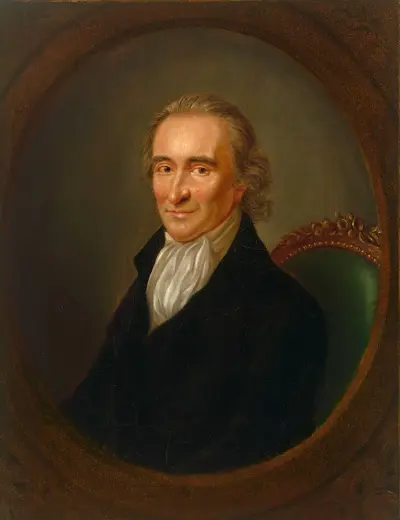
Thomas Paine was an English-born American political activist, philosopher, political theorist, and revolutionary. He authored Common Sense (1776) and The American Crisis (1776–1783), the two most influential pamphlets at the start of the American Revolution, and helped inspire the patriots in 1776 to declare independence from Great Britain. His ideas reflected Enlightenment-era ideals of transnational human rights. Historian Saul K. Padover described him as "a corsetmaker by trade, a journalist by profession, and a propagandist by inclination".
