Voltaire Quotes
It is difficult to free fools from the chains they revere.
Voltaire, 1694-1778, [Francois-Marie Arouet], French Historian & Dramatist, Le dîner du comte de Boulainvilliers, 1767
Sourced by: Eigen's Political and Historical Quotations


At the time, Muslim clerics had a great deal of influence and in many cases legal control over all facets of Turkish society much as exists in other Islamic societies today. They even controlled what was taught in the schools. Remarkably, without bloodshed, Ataturk broke both the power and the influence of the clerics on all official and public activities. Many Turkish Muslims even developed a type of reformed Islam with the relationship between the individual and the clerics one of parity much like Protestant churches in the West. At the same time there was a more orthodox part of the population and while they sent their children to religious schools, they also attended public schools so even the orthodox Muslims in Turkey learned science and modern subjects which are still not taught in most Islamic schools and madrassas.


The classic dilemma is that religious moderates and scientists do not argue to force everyone to follow the dictates of science, but in almost all societies and nations, religious fundamentalists strive to force their beliefs on all and make disagreement illegal.


Many are surprised that the first Mexican revolutionary leaders were Catholic Priests, because the Catholic Church was always on the side of Spain and against Mexican revolutionary efforts. The church and the state were totally intertwined at the time, so the Church officials supported the government officials and vica verca. However, there were priests who saw the injustice and corruption of the colonial Spanish government, and not only sided with the revolutionists but became revolutionary leaders. These were opposed and usually excommunicated by the Church establishment authorities.


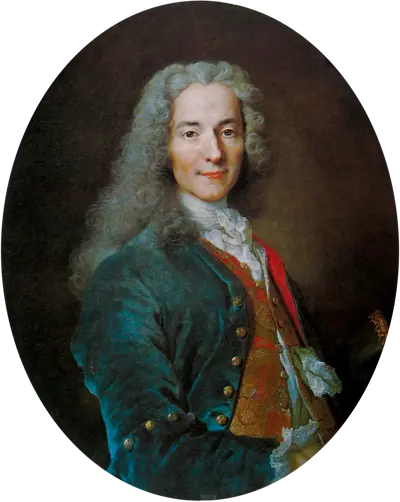
François-Marie Arouet, known by his nom de plume Voltaire (/vɒlˈtɛər, voʊl-/; also US: /vɔːl-/; French: [vɔltɛːʁ]), was a French Enlightenment writer, historian, and philosopher famous for his wit, his criticism of Christianity—especially the Roman Catholic Church—as well as his advocacy of freedom of speech, freedom of religion, and separation of church and state.
