John Wycliffe Quotes
It is certain that the truth of the Christian faith becomes more evident the more the faith itself is known. Therefore, the doctrine should not only be in Latin but also in the common tongue, and as the faith of the Church is contained in the Scriptures, the more these are known in the true sense, the better.
Neander, August. General History of the Christian Religion and Church. Vol. 9, Henry G. Bohn, 1858, p. 237.


The principle applies to religious and political doctrine, both.


This view was infuriating to the Rabbis, Priests and Immams of the time. Miracles and Scrip[ture were not determinatve Spinoza taught but the issue was did the docrine of the religion make sense. Spinoza’s ideas were considered so radical and dangerous that he was the only man in history who was excommunicated by the Catholics, the Jews and the Muslims.
He offended the Rabbis ofr Amsterdam by extolling the concept of salvation and Jesus Christ, and he offended the Priests with the last sentence. Much of his theology also offended the Muslims. Spinoza’s ideas were considered so radical and dangerous that he was the only man in history who was excommunicated by the Catholics, the Jews and the Muslims.


He was the only English Pope. The act of invasion had been sanctified earlier in Adrian’s Papal Bull. See {610518}. Henry’s invasion was successful but the occupation and reform was a disaster which has ramifications to this day.
He was the only English Pope. This was the authority that enabled English King Henry II to invade Ireland. Many historians consider it the beginning of the problems between the Ireland and England which persists to this day. See {610520}. Some scholars think that this bull was a forgery stating that the writing style was different from other bulls of Adrian IV. Opponents believe that a change in secretaries could easily have accounted for the difference.
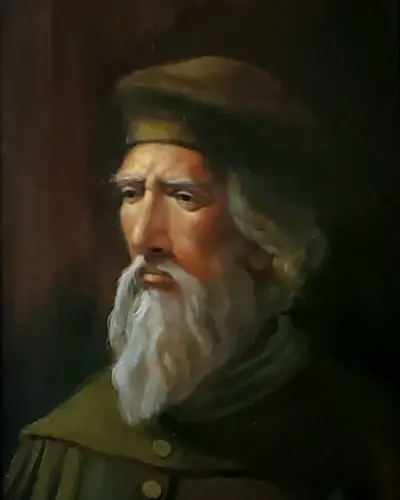
John Wycliffe was an English scholastic philosopher, theologian, biblical translator, reformer, priest, and a seminary professor at the University of Oxford. He became an influential dissident within the Roman Catholic priesthood during the 14th century and is considered an important predecessor to Protestantism.
