Barbara Tuchman Quotes
It hurt the economic historians, the Marxists and the fabians, to admit that the Ten Hour Bill, the basic piece of 19th century legislation, came down from the top, out of aa nobleman's private feelings about the Gospel, or that the abolition of the slave trade was achieved, not through the operation of some "law" of profit and loss, but peurlet as the result of tyhe new humanitarianism of the Evangelicals.
Tuchman, Barbara W. The Proud Tower: A Portrait of the World Before the War, 1890-1914. Macmillan, 1966, p. 79.


The coal miners’ strike had been going for 5 months. The major issue was the right to union recognition. The mine owners refused to do that and decided to take the strike. President Theodore Roosevelt mediated a settlement where the miners won more money but no union recognition. The great appeal and significance of this speech is that it stressed the young children who started working in the mines at ages 8 or 9 by working on the “breakers” where they broke up large chunks of coal into smaller chunks. The children never saw daylight and never had a chance for education much less a childhood. At the time, and well into the 20th century the Republican Party was adamantly opposed to any legislation regulating child labor and when two decades later public opinion finally forced Congress to pass Child Labor legislation, the Supreme Court declared it unconstitutional and it took a Constitutional Amendment. See {32240}, {642469}, and {36885}.

One of his biggest opponents in this effort was Chancellor Otto von Bismarck-Schoenhausen, 1815-1898.

When TR was the NYC Police Commissioner, Riis had given him midnight tours of the precincts so Roosevelt could see for himself what the police were and were not doing. When he became Governor, his labor inspectors never reported the terrible sweatshop conditions that the newspapers were writing about. So TR asked Riis to arrange some personal “visits”. The two of them alone would show up at a sweatshop in the middle of the day and the governor would simply introduce himself to the owner, who dared not prohibit the Governor from coming in and then asking questions of workers and managers. Even in modern times that would not happen in a large state. The Governor then realized that the state labor inspectors were not doing their jobs and covering up the problems. Major changes took place.


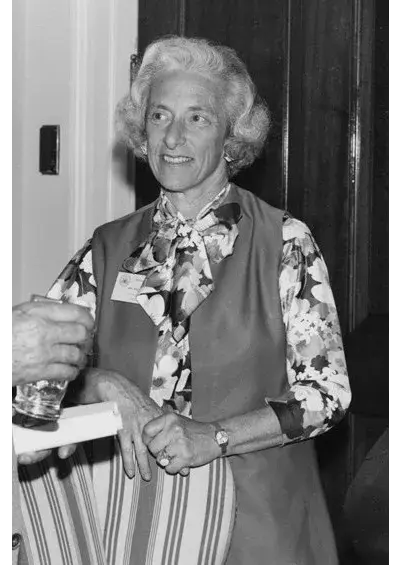
Barbara Wertheim Tuchman was an American historian and author. She won the Pulitzer Prize twice, for The Guns of August (1962), a best-selling history of the prelude to and the first month of World War I, and Stilwell and the American Experience in China (1971), a biography of General Joseph Stilwell.
