Herbert Brownell Quotes
Interdepartmental memoranda, advisory opinions, recommendations of subordinates, informal working papers, material in personnel files, and the like, cannot be subject to disclosure if there is to be any orderly system of government.
Herbert Brownell, 1904–1996, U. S. Attorney General (Republican), 1954
Sourced by: Eigen's Political and Historical Quotations


The “gentleman” was a member of Congress. This is an issue between the Congress and the Executive Branch which has existed as long as our Republic: Whether all members of Congress should have access to all classified secret information of the Government. Mrs. Roosevelt who was usually an advocate of transparency, on this issue tended to side with the argument of the executive branch. Note that the arguments made in 1939 are still fought over today.

At the time there was no Secrecy & Classification System nor any laws enforcing secrecy or confidentiality. However there was no freedom of information laws of expectations even on the part of journalists. This was the first Freedom of Information policy of the American government. Some politicians were more open than others but there was no national, governmental before this. There were however leakers and whistleblowers though the terms were not in use. Note that Roosevelt herein created the first whistle blower protection—himself.


He was referring to the massive surveillance NSA program whereby all telephone calls and most digital communications for every American was secretly tapped and stored in an NSA data base. The Senators of the Intelligence Oversight Committee received information in Classified executive sessions but they were not allowed to disclose anything that they learned in the briefings—even something as huge and probably unconstitutional as this program. Moreover, even when officials of the Intelligence Services lied under oath (see {634917}) in open session, the Senators could not disclose this fact.

3rd Earl Russell of Kingston. The main reason for the secrecy was that the FBI had made some serious blunders in tracking Oswald before the assassination, and failed to apprehend him when he was involved in another attempted assassination, and no one thought this negated the single assassin theory so J. Edgar Hoover was able to keep the Bureau’s incompetence secret. However, the CIA, even with the secrecy lied to the Commission to cover up their blunder in having hired Mafia organized crime figures to assassinate Fidel Castro. The attempts failed but Castro threatened to retaliate, and this possibility was never discussed by the Warren Commission as they did not have the information much less the public. Because of the secrecy, many people have been suspicious of the lone assassin conclusion that the commission had reached as they assumed venality rather than incompetence.


See {594396} for his going a step further and advocating lying in the interest of the nation. Note that he does not consider the simple alternative of telling the voters and then fixing the problem.

Senator Dianne Feinstein, Chairman of the Senate Intelligence Committee, had released an unclassified Summary of the Committee Report on the CIA using torture and perverse treatment of suspect terrorists in the aftermath of the 9-11 attack on New York. Most Republicans argued vehemently that the Report should be classified and kept secret as the CIA behavior was so egregious, unpalatable, and morally reprehensible that there would be negative consequences including perhaps demonstrations and attacks against Americans in foreign countries. Moreover, Terrorist organizations would use the heinous CIA behavior as a recruiting tool for anti-American terrorists. McCain, who had himself been the victim of North Vietnamese torture cited the moral and ethical reasons to prohibit torture but also explained what has been proven over and over again that torture victims will tell the torturer any nonsense that they think the torturer might believe just to get obtain relief from the agony of the torture.


The notion of Executive Privilege developed over the years. Our first President thought nothing of giving the Senate access to all the papers and records regarding the negotiations of the treaty with Great Britain.

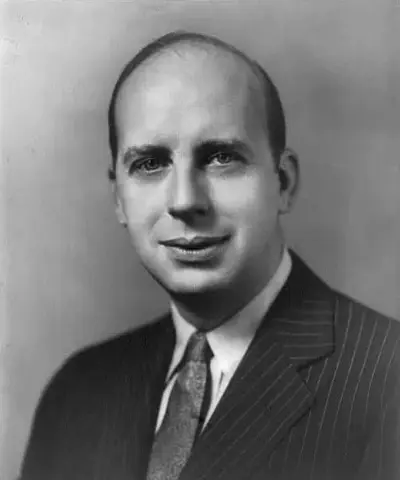
Herbert Brownell Jr. was an American lawyer and Republican politician. From 1953 to 1957, he served as United States Attorney General in the administration of President Dwight D. Eisenhower.
