Edmund Burke Quotes
in Virginia and the Carolinas they have a vast multitude of slaves. Where this is the case in any part of the world, those who are free, are by far the most proud and jealous of their freedom. Freedom is to them not only an enjoyment, but a kind of rank and privilege.
Edmund Burke, 1729-1797, Irish Orator & Member of the British Parliament, An Account of the European Settlements in America
Sourced by: Eigen's Political and Historical Quotations


One of the most amazing things about Abraham Lincoln is the way he grew and matured over time. In 1854 he was not sure that the Negro could be the equal of the white. As he met more Black leaders, saw more, reflected more, and had more responsibility, he grew and developed his views on race. But it was statements like this that led to the great distrust that the very strong abolitionists like Wendell Phillips had in him.


In the Civil War a drafted conscript could pay money instead of serving in the army. Many rich and middle class men did so leaving a higher proportion of the poor to be drafted. The song is sometimes misattributed to William Cullen Bryant.

Jefferson was one of the early observers that the the institution of slavery corrupted and depraved the whites.

The essential conundrum for the Southerners of the Early United States was their independence as individual states vis a vis the trust and dependence that would be required if they gave up much of their traditional authority to manage their own affairs. However, if they chose to maintain States’ rights and other States did as well, they not only lose the security and unity of a nation, but the other states were more economically powerful, better educated, with stronger infrastructures as well. The changing world politics, industrialization, and technology was making it more and more difficult for a Southern State to have it both ways. They could have a loose affiliation of states, maintain their own autonomy but would be saddled with war debt and a slave-dependent economy that was itself deteriorating. Or they would be in a strong union where they were the weaker economic and political forces and might be politically and culturally dominated by states like Pennsylvania, New York and Massachusetts which would force major social and economic reforms upon the South. The knot to which Lee referred was the mythical one so complex that non could untie it, but it could instantly be cut with a sword. Lee argued that the Southern states would have to accept the dominance of the other states (which was like political slavery) or just cut the knot and not ratify the Constitution. More negotiating and trying to untie the knot would be useless.


The slaves to which he is referring were the serfs of Slovakia who for hundreds of years had literally been the property of the Hungarian nobility. The problem however has been observed about any long-term slavery.

The country had been completely polarized by 1854. It was only a matter of time for something like the Civil War to break out. The impossibility of compromise was not just held by radicals like Garrison but after the Compromise of 1850 fell apart, most politicians on both sides s

Hammond had published a series of letters attacking the “cruelty” of the industrial factories of the North compared to the relative “humaneness” of Southern slavery.


He is often referred to as “of Lahore.” He was a much better theologian than a historian. His credit of Islam with the principles that would end slavery, ignored the fact that just as American founding fathers espoused equality and freedom yet some owned slaves, likewise Mohammed, the founder of Islam, was a slaveholder. Historically, long after most of the world had abolished slavery, it still existed in the Islamic nations. They were forced out of the African slave trade by the European powers in the 19th century. But slavery was legal in Saudi Arabia as late as the 1960s. Slavery was still practiced in Sudan in 2005 with Muslims attacking Christians and Animists and taking them as slaves despite the official laws banning such practices. The government itself aided the slavers. Also, although Islam is credited with a major assault on slavery, it was not slavery per se that Muhammad banned. It was the slavery of another Muslim. Sharia and the Koran allows slavery so long as the slave is an unbeliever.
The political conflict between the right of the slave to liberty and the right of the slave owner to his property made the immediate abolition of slavery very difficult after the Spanish had been overthrown in South America.

Before Wilberforce, British society had never conceived of a world without slavery. It was assumed, unpleasant and cruel that it was, slavery was a part of civilization and much of the world and economy depended upon it. However, Wilberforce changed the way slavery was conceived of --- not necessary any longer and profoundly evil.
Even before we had a Constitution there was major opposition to slavery. The “price” of the American Union was the acceptance of the slavery of the South. But the hypocrisy of a country based on liberty to allow and enforce slavery was not lost on the founding fathers. Ironically the abolitionists among the founding fathers were certain that they could persuade the Southern slaveholders of the error of slavery in a few years and things would be set right in the land. Even George Washington {630626}, and Thomas Jefferson and some other slaveowners at the time wished to see its abolition. Slaveholding Southern Founding Fathers in general were so wary of the abolitionists that they achieved structural, disproportionate, power in the new Constitution to ward off the abolitionists attempts to reform slavery.

This fear was great among many who were abolitionists as potentially there might be mass slaughter of all Southern whites.

This is a memorable historical quotations because it shows the extreme level of hypocrisy and lack of logic of which man is capable of when his way of life and world view is threatened. In this case Gordon sees the right to own slaves as a basic civil right. He does not see that the right of possessing slaves totally denies virtually all civil rights to the slave. In his and other Southern views, to assure a man’s liberty he had to have the right and freedom to deny freedom to others, torture others at will, destroy families and remove all hope and aspiration of some people.

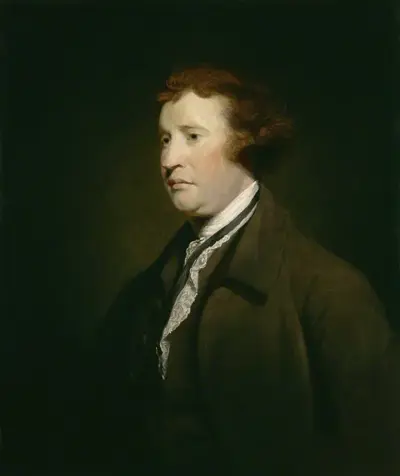
Edmund Burke was an Irish statesman, economist, and philosopher. Born in Dublin, Burke served as a member of parliament (MP) between 1766 and 1794 in the House of Commons of Great Britain with the Whig Party after moving to London in 1750.
