Roger B. Taney Quotes
What Dred Scott's master might lawfully do with Dred Scott, in the free state of Illinois, every other master may lawfully do with any other one, or 1,000 slaves, in Illinois, or in any other free state.


Baron Brougham and Vaux


The first sentence is inscribed on the Jefferson Memorial in Washington DC. The last two sentences are rarely quoted.


In early New England the General Court served as both a legislature and a judiciary before separation of powers was introduced. 5 years later the Court banned importing African slaves at all. While slavery was not common in Rhode Island, the laws was not seriously enforced on those who would defy them. It does represent a public anti-slavery sentiment that existed in Early America. It would take 200 years for Rhode Island to finally eliminate all forms of slavery.

It was not uncommon for free Blacks to purchase slaves, marry them and set them free.

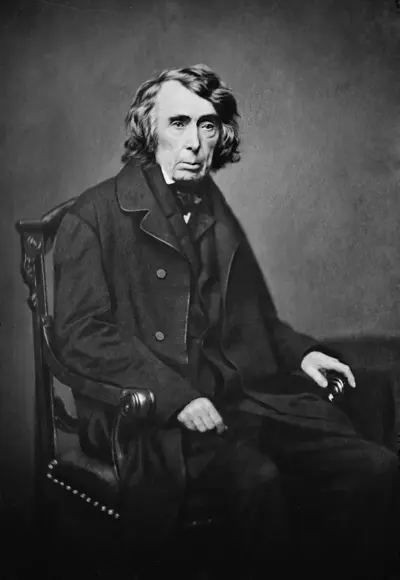
Roger Brooke Taney was the fifth Chief Justice of the United States, holding that office from 1836 until his death in 1864. He delivered the majority opinion in Dred Scott v. Sandford (1856), ruling that African Americans could not be considered citizens and that Congress could not prohibit slavery in the territories of the United States. Prior to joining the Supreme Court, Taney served as the United States Attorney General and United States Secretary of the Treasury under President Andrew Jackson.
