Thomas Gage Quotes
In this exigency of complicated calamities, I avail myself of the last effort within the bounds of my duty to spare the efflusion of blood; to offer, and I hereby do in his majesty’s name, offer and promise his most gracious pardon to all persons who shall forthwith lay down their arms and return to the duties of peaceable subjects.
The British Governor was genuinely anxious to avoid bloodshed and the American Revolution. However, the conflict had been brought about by the actions of the British Parliament and the Kings ministers, and Gage did not have the power or authority to alter the issues of the fundamental conflict—taxation, colonial government, economics, self determination. While he offered pardons, in this proclamation he specifically exempted Samuel Adams and John Hancock of whom he said “whose offences are of too flagitious a nature …”
Thomas Gage, 1721–1787, British Governor of Massachusetts, Commander in Chief of British Forces in North America, Proclamation, Boston, June 12, 1775
Sourced by: Eigen's Political and Historical Quotations


The Vice President’s Chief of Staff, Scooter Libby, had committed criminal acts in his zeal to threaten an experienced American Diplomat who had gone on an assignment for the CIA and reported information that cast doubt on the story that the Iraqis were about to deploy a nuclear weapon, thus giving ammunition to the few people in Washington who did not want to invade Iraq. To hurt the Ambassador, Libby leaked the fact to the press that his wife was a covert CIA agent. This not only ruined her career as she had been outed, a crime, but she was one of the CIA’s most effective agents whose contacts abroad were then put in terrible danger as having been working with a spy. No one at the time knew who the leaker was, but Bush was furious—see {630116}. He ordered all White House staff to find the leaker. The Vice President and Libby did not tell the President who the leaker was thinking that no one would ever find out. But when it was discovered it was public and Libby was indicted and faced trial. In the last days of Bush’s presidency Vice President Cheney put tremendous pressure on the President to Pardon Libby as did the extreme right wing of the Party. Cheney accused Bush of “leaving wounded on the battlefield’ arguing that Libby did everything for the President and his decision to invade Iraq. Bush had no formal policies and rules about pardons that he could turn to or ask a staffer to determine if the case warranted it. He finally yielded and commuted Libby’s prison sentence but left intact the $240,000 fine, the community service and the conviction of a felony which caused Libby to lose his license to practice law. Given Bush’s angry statements about the leak before the leaker was determined, he was accused of being a partisan hypocrite, uncaring about our agents safety and national security when his associates were guilty. The VP and the Republican extremists were also angry that Bush did not Pardon Libby completely and left the felony conviction on his record. This plagued Bush in the latter days of his presidency where his popularity had sunk very low. He wanted to help the new President avoid the same mistake. Ironically Clinton did not take his advice to have a firm pardon policy and in the closing days of the Clinton administration where he was very popular despite the partisan accusations and attempts to impeach him, ended up under great pressure for pardon’s and made some that have tarnished his reputation ever since.

Unfortunately, his close successors did not share Alexander’s surprisingly modern view.


Generally after civil wars there have been extensive reprisals and trials of the winning side against the losing one. Lincoln was determined that this pattern not be followed as the bloody war was coming to an end. Ironically, Andrew Johnson, Lincoln’s successor and a Southerner, was, together with some of the Radical Republicans, in favor of trying many of the Southern leaders for treason and rebellion. Lincoln’s view however and that of the moderate members of Congress prevailed. However, the Southern Whites generally would not comply with the Constitutional Amendments and laws regarding the role of the Negro, and Johnson was very sympathetic to their racism which led to a conflict between Johnson and Congress.


The President refused since Lyon himself had not apologized and asked for forgiveness.


For the required Oath, see {623308} . There were several to the amnesty. These included graduates of West Point and the Naval Academy who had joined the rebellion, senior officers and officials of the Confederacy, those who were accused of war crimes and abusing Union prisoners of war, persons who went abroad to help the Confederacy, and Northerners who had gone South to aid the rebellion. Many scholars think that although Lincoln had expressed his desire to provide an amnesty after the war was over, he probably would have been more lenient than Johnson who exempted many on the Southern side—especially the leaders. Ironically, Johnson was a Southerner but was personally, morally outraged at taking up arms against the United States and in that sense was much more of a hawk than Lincoln and many of the radical Republicans even. However, he was an inveterate racist and resisted most of the attempts to implement equality during the Reconstruction. Many argue that but for Johnson, Reconstruction might have been much more successful. It was easy for Southerners to resist equal rights for Blacks when they knew that the President was also opposed to measures to produce equality.

The prisoners were shot. Over a decade later, Fremont was running for the Presidency against Buchanan. This incident became public and hurt Fremont with many voters.

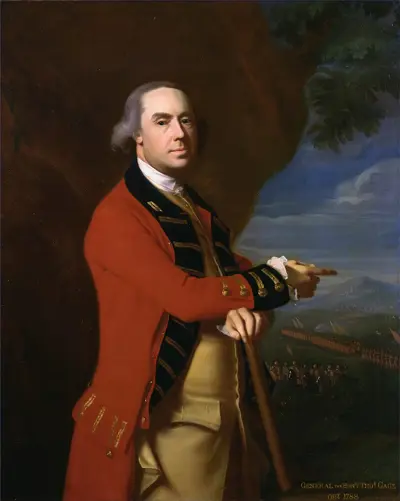
General Thomas Gage was a British Army general officer and colonial official best known for his many years of service in North America, including his role as British commander-in-chief in the early days of the American Revolution.
