Charles de Gaulle Quotes
In politics it is necessary either to betray one's country or the electorate. I prefer to betray the electorate.

This is a very important quotation. No one likes to make moral compromises, but Mann realized that there was a necessity in a complex society—especially a republic to make compromises. Politics cannot function without compromises of all kinds moral and otherwise as different people have different views of morality and rectitude. Mann observed that if compromises must be made, it is better for the politicians to make them than the educators, physicians, clerics, and other professional groups. Therefore politics takes the heat so that the other institutions of society do not have to. Thus politics has this crucial role among its others according to Mann.


He does not mean that all of a president’s actions betray the principles and promises to the president’s political base. But there are inevitably, some issues where every president does this. The most popular president in American history--Franklin D. Roosevelt, 1882-1945, 32nd President of the United States (Democrat, NY)—was constantly being criticized by his most ardent supporters for not doing enough or allowing unfair situations to remain uncorrected. Racial discrimination—even in the armed forces—was one. Internment of Japanese American Citizens was another. Essentially the President’s election is partisan, but his governing must serve those who did not vote for him as well as those who expect his partisan loyalty.


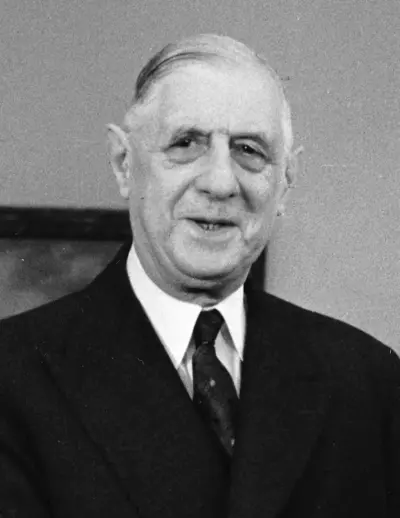
Charles André Joseph Marie de Gaulle was a French army officer and statesman who led Free France against Nazi Germany in World War II and chaired the Provisional Government of the French Republic from 1944 to 1946 in order to reestablish democracy in France. In 1958, he came out of retirement when appointed President of the Council of Ministers (Prime Minister) by President René Coty. He rewrote the Constitution of France and founded the Fifth Republic after approval by referendum. He was elected President of France later that year, a position to which he was reelected in 1965 and held until his resignation in 1969.
