Michelle Alexander Quotes
In my view, the most important lesson we can learn from Dr. King is not what he said at the March on Washington but what he said and did after the march. In the years following the march, he did not play politics to see what crumbs a fundamentally corrupt system might toss to the beggars for justice.
Alexander, Michelle. Keynote Address. 33rd Annual Martin Luther King Jr. Memorial Convocation, University of California, Santa Cruz, 31 Jan. 2013.


Romney’s father, George W. Romney, was Governor of Michigan and lost in his attempt to be the Republican presidential candidate. He was a strong supporter of civil rights, but not only did Romney never see his father marching with King, there is no record that the elder Romney ever did march with King. He did march in a civil rights rally in Michigan but King was not present. The elder Romney was a strong supporter of civil rights however, and the son was trying to make the point that he came from a family where civil rights has always been important. This quotation became a cause célèbre in the 2007 Presidential primary campaign as critics gave this as an example of Romney’s disregard for the truth in his effort to be liked and gain support. Defenders claimed that this was a symbolic statement and an example of acceptable political hyperbole.

He had written this text on a newspaper when he was jailed in Birmingham for violating a court order not to demonstrate. A common tactic of the Southern segregationists was to have local segregationist judges issue injunctions against civil rights demonstrations on the grounds that they would promote violence. These were generally unconstitutional, but King and others were jailed until the legal appeal could even be heard.


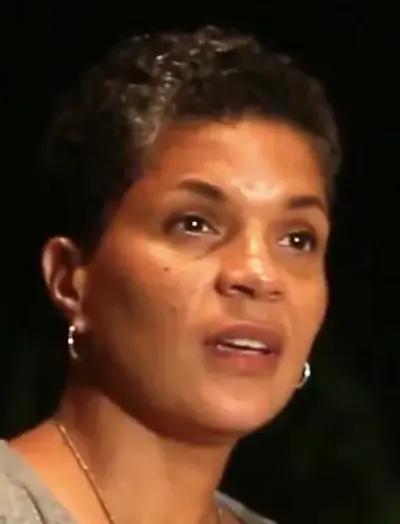
Michelle Alexander is a writer, civil rights advocate, and visiting professor at Union Theological Seminary (New York City). She is best known for her 2010 book The New Jim Crow: Mass Incarceration in the Age of Colorblindness, and is an opinion columnist for The New York Times.
