E. Belfort Bax Quotes
In mediaeval times, the Sunday was a day of recreation, of fairs, Morris-dances, mystery plays, &c., and not of enforced idleness and gloom. The Puritan movement which originated at the end of the sixteenth century … till the rebellion which cost Charles I his head, embodied in its programme a strong antagonism to the old English Sunday, an antagonism which was accentuated, by the action of the opposite party who took an equally emphatic stand upon the Sunday of tradition …. a “day of rest” was ratified by a Puritan Parliament in the well-known Act of Charles II. Thenceforward the English Sunday became the dreary day it is now.
E. Belfort Bax, 1854–1925, English Attorney, Journalist & Philosopher, Socialism and Religion, June 1884
Sourced by: Eigen's Political and Historical Quotations

In effect this was one of the earliest civil Blue Laws.

This historical quote is important because it shows that there was great dissention about the celebrating of Christmas even among different Christian sects. Traditionally, the celebration of Christmas in a government building or school would have offended half the Christian population. In early America, Christmas celebration was legally prohibited in some states and required in others. This was one of the reasons that the Founding Fathers wrote the First Amendment into the Constitution. In modern times, some critics accuse the requirements that Christmas celebration in public facilities as being anti-Christian. But the problem has been with America since before the Constitution.

Shabbat is the Hebrew word for the Sabbath. In Israel there is conflict between ultra-orthodox Jews on the one side and secular Jews, Christians and Arabs on the other regarding store openings and closings on Saturday—the Jewish Sabbath. The orthodox want the power of the state to force stores to close on the Sabbath. The others want the freedom of the individual to either close or open a store, to shop or not to shop, to keep Friday as the Sabbath as the Muslims do, Saturday as the Jews and a few Christian sects do, or Sunday as most Christians do. This used to be a major issue in the United States. Local communities all had what were called “Blue Laws” that controlled the Sabbath. The courts however found these unconstitutional and these issues have disappeared as political issues in America.


The major targets of this law were the Puritans who would not attend the normal Church of England services but had their own, usually in a private home.


Ingersoll was considered to be the greatest orator and political thinker of his day, but his overt atheistic views curtailed his elected political career.

At the time, the chief executive of these states were called Presidents because they presided over the legislature as well. This proclamation was issued before the Constitutional Convention in 1787 and the later ratification separating church and state. However, even after the Constitution was ratified some states continued to use state law to enforce the Christian Sabbath. That practice would continue in some places until the 2nd half of the 20th century.


This is the first documentary evidence of Negro slaves in Colonial America organizing a Christian religious service. It was a Puritan service in Massachusetts.
In 17th century England the Puritans were major opponents of the Celebration of Christmas which at the time had been celebrated mostly by Roman Catholics.

This is a quotation which shows that Christmas was not a Christian Holiday that was commonly celebrated In early America. The reason that this is important is when there were many legal battles of public schools and municipalities celebrating Christmas and exhibiting crèches and Christmas trees, several of the proponents argued the doctrine of originalism—namely that we should not declare unconstitutional anything that was common and accepted at the time of the Constitution’s writing, debating, and ratification. They argued that the First Amendment was not intended to cover celebrations of Christmas as the founding fathers would not have made unconstitutional that which was common. While the principle of originalism has advocates and critics, the originalism theory does not hold regarding Christmas because Christmas was not commonly celebrated in early America. In no state was Christmas a holiday, and there were jurisdictions that had actually outlawed the celebration of Christmas which was associated with Catholics and not all of them. See {629843} for another.


The Protestant Clergy issued similar statements. This was one of the few areas of agreement.
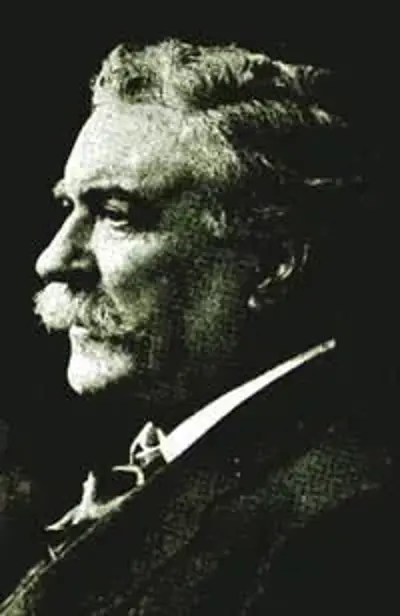
Ernest Belfort Bax was an English barrister, journalist, philosopher, men's rights advocate, socialist, and historian.
