Voltaire Quotes
No operas, plays, or concerts are allowed in London on Sundays, and even cards are so expressly forbidden that none but persons of quality, and those we call the genteel, play on that day; the rest of the nation go either to church, to the tavern, or to see their mistresses.
Voltaire, 1694-1778, [Francois-Marie Arouet], French Historian & Dramatist, Letters on England
Sourced by: Eigen's Political and Historical Quotations

This establishment and enforcement of the Christian Sabbath was really made unconstitutional when the Constitution including the Bill of Rights was adopted in 1789. None the less, many communities in the United States maintained laws and law enforcement regarding the Christian Sabbath (called “Blue Laws”) for years. It was only into the 20th century before the practice died out after a number of cases were declared unconstitutional. Even into the 20th century, there are occasional cases where communities try and use the civil law to enforce their religious beliefs about the Sabbath. There was even a Jewish community in upstate New York which passed laws enforcing the Jewish Sabbath on Saturday. That also was a violation of the First Amendment and thus was unconstitutional.

In effect this was one of the earliest civil Blue Laws.


Shabbat is the Hebrew word for the Sabbath. In Israel there is conflict between ultra-orthodox Jews on the one side and secular Jews, Christians and Arabs on the other regarding store openings and closings on Saturday—the Jewish Sabbath. The orthodox want the power of the state to force stores to close on the Sabbath. The others want the freedom of the individual to either close or open a store, to shop or not to shop, to keep Friday as the Sabbath as the Muslims do, Saturday as the Jews and a few Christian sects do, or Sunday as most Christians do. This used to be a major issue in the United States. Local communities all had what were called “Blue Laws” that controlled the Sabbath. The courts however found these unconstitutional and these issues have disappeared as political issues in America.


At the time, the chief executive of these states were called Presidents because they presided over the legislature as well. This proclamation was issued before the Constitutional Convention in 1787 and the later ratification separating church and state. However, even after the Constitution was ratified some states continued to use state law to enforce the Christian Sabbath. That practice would continue in some places until the 2nd half of the 20th century.

In 17th century England the Puritans were major opponents of the Celebration of Christmas which at the time had been celebrated mostly by Roman Catholics.
Colton also ordered the Abbot to have no further mistresses. There was a basic concern about and prejudice against the Irish for their relatively promiscuous norms regarding sex. See {639438}.


The British Women’s Temperance Union was a firm advocate of the banning of ice cream shops as well as saloons on the Sabbath.

England had, under Henry VIII, left the Roman Catholic Church where the King replaced the Pope as head of the English Church. Henry’s successors then had to organize and manage the national Christian church. James was discussing the hierarchy of the Church of England and there was a suggestion that Bishops be eliminated and have every priest directly responsible to the crown. Bishops would be powerful figures who might form a power center. (They did later). However, King James I observed that the King is God’s choice and rules by divine right. So there had to be bishops to crown kings. The bishoprics were retained.

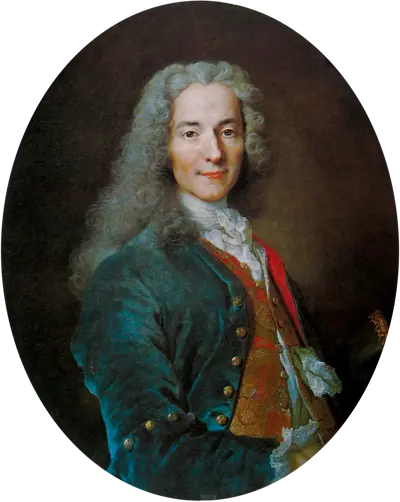
François-Marie Arouet, known by his nom de plume Voltaire (/vɒlˈtɛər, voʊl-/; also US: /vɔːl-/; French: [vɔltɛːʁ]), was a French Enlightenment writer, historian, and philosopher famous for his wit, his criticism of Christianity—especially the Roman Catholic Church—as well as his advocacy of freedom of speech, freedom of religion, and separation of church and state.
