Melanne Verveer Quotes
In India, at the community level, young men are playing an absolutely essential role in changing the cultural norms and deeply held practices concerning women. They are doing this in a way that not only empowers women and girls, but really empowers the young men as well.
Verveer, Melanne, and Kim K. Azzarelli. Fast Forward: How Women Can Achieve Power and Purpose. Houghton Mifflin Harcourt, 2015.


Many politicians in that day would campaign from large carts drawn by oxen – a predecessor to the bandwagon of sorts. She was 1 of the 4 women who entered Oberlin College in 1837 thus becoming the first co-educational institution of higher education in the United States.


She was the First Lady, who in many ways was also one of the nation’s leading feminists. Betty Ford, Barbara Bush, and Hillary Clinton were also First Ladies who supported key feminist position but ER was 30 years ahead of them—a time when conservatives and sexists viewed her as a dangerous radical. For example, see {585211}.
Marcus Porcius Cato. This quotation has had two different interpretations over time. One was that women if they received equality of treatment and voting would have an advantage for they also had their traditional “feminine wiles” and their sexuality, hence would dominate men. The second was a also a warning but based on the fact that women were superior in many ways, and given an equal chance, would excel men. The later interpretation is argued by some who point to the 2011 American data that shows more females than males graduating from high school and college, and females outnumber males in medical, law and several other professional schools. With the exception of a few Roman men, most heeded Cato’s warning and never took a chance on female equality.


Jinnah was a modern Islamist who saw the role of females in a modern context. He, like the Indian Hindu leaders were in a sense products of the West and Western government and education. He would be very surprised that in his Pakistan men can murder their female relatives who they believe have dishonored the family, or that women would not be educated in the Madrassas, or that authorities could sentence a female relative of a man deemed guilty of seduction to be gang raped, but that is what happens in modern Pakistan. Jinnah and many of the early leaders believed that their new government could modernize Islam but the control and influence went the other way. Pakistan became a religiously dominated autocracy rather than the democracy that Jinnah foresaw.


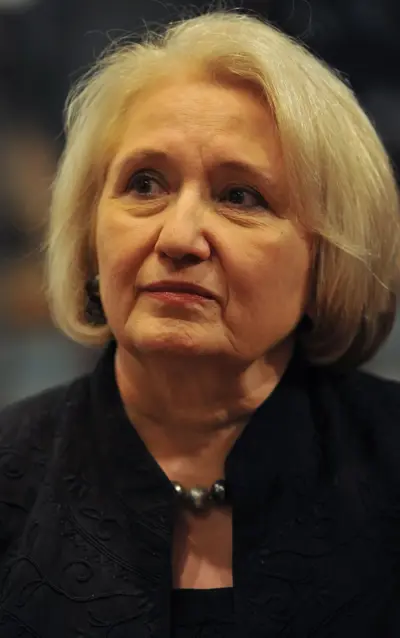
Melanne Verveer is the executive director of the Georgetown Institute for Women, Peace and Security at Georgetown University, a founding partner of Seneca Point Global, a global women strategy firm, and a co-founder of Seneca Women. She is also the co-author with Kim Azzarelli of the book Fast Forward: How Women Can Achieve Power and Purpose.
