Hermann Goering Quotes
In defiance of all foes, this air force is invincible.
The Luftwaffe had easily defeated the air forces of most of Continental Europe, but when it attacked Britain, they met their match and were defeated in the Battle of Britain, never to achieve total air superiority again.
Hermann Goering, 1893-1946, Deputy Fuhrer of Nazi Germany & Chief of the Air Forces, German General and Nazi Politician, Statement, March 1, 1938
Sourced by: Eigen's Political and Historical Quotations


Note that even then, De Gaulle’s nationalist ego focused not only on glory but glory that need not be shared. It was always a great strength and a great weakness for him. He and many French officers were so fixed on the glory of beating the Germans, that they did not focus on their ½ million casualties and were not prepared for the German countermeasures that turned the battle from a French victory to a long standoff and stalemate of the “Western Front” where neither side could advance much. Note also that De Gaulle failed to mention the British Expeditionary Force that twice saved the French from being overrun. Denial for the honor of France was always one of De Gaulle’s characteristics. See {642233} for the English commander’s view of the outcome of the Battle of the Marne.

On his trip to Germany, Reagan was invited to lay a memorial wreath at the German military cemetery in Bitberg. His staff assistant Michael Deaver had set the trip up but did not know that German Waffen SS Officers were also buried at the cemetery along with the far more numerous Wehrmacht. American Jews and Veterans Groups protested this honor to the SS murderers of millions of people including American prisoners of war. The proposed trip was covered very heavily by the press and editorials throughout the country called for the President to cancel the cemetery part of his trip. He did not. This quotation shows how symbols can take on a meaning that was never intended by the parties.


The Americans had attacked the Belgian city of Brest and had been repulsed by a well fortified and led German contingent. Analysis of the wartime situation showed that Brest, a port city was no longer necessary for the Allied supplies as numerous other ports were taken and were available. Many of the officers wondered why Bradley wanted them to attack and defeat the Germans in Brest when all they had to do was surround them and eventually starve them out. Bradley’s response explained a subtle aspect of military and foreign policy. It is that the United States Army, once committed, will never be defeated or stopped. Had the Americans not already attempted to take Brest, they would not have bothered at this stage of the war, but since they had, it was imperative that they succeed. Otherwise, it was felt that Allies and enemies would not take future American threats as seriously and that the morale of American soldiers would even be affected if they thought they could be beaten. A similar problem occurred in the Vietnam War and later in the Iraq war. Once the short term military necessity of fighting was gone, the long-term factors came into play and often will. Others argue that the United States military is so strong and well equipped, that it no longer necessary to take casualties just to prove a psychological point.
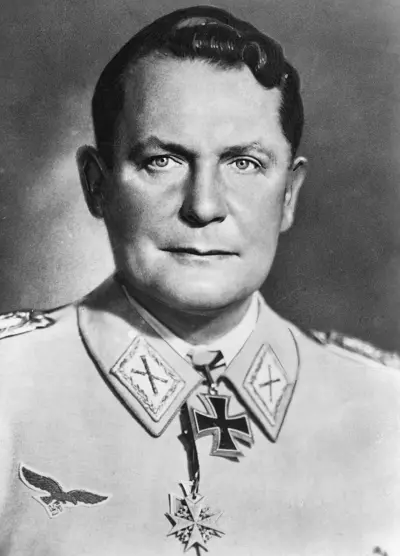
Hermann Wilhelm Göring was a German political and military leader and a convicted war criminal. He was one of the most powerful figures in the Nazi Party, which ruled Germany from 1933 to 1945.
