George Santayana Quotes
In any close society it is more urgent to restrain others than to be free oneself. Hence the tendency for the central authority to absorb and supersede such as are local or delegated.
Santayana, George. Dominations and Powers: Reflections on Liberty, Society, and Government. Charles Scribner's Sons, 1951, p. 306.


In this quotation, the conservative hero, Mises, sounded like an anarchist or a libertarian.


There are some who have argued that the United States 20th century of world dominance was an empire. Perhaps so, but it did not have most of the characteristics that Thucydides and most others thought of as characteristics of empire—occupation of nations, rule by the Imperial country, privilege in other nations of the Empire, control. Most important, in historical empires, money—in the form of taxes or goods was commandeered by the Empire for the mother country. The US taxed no one, and money flowed the other way in the most generous sharing of foreign aid in human history. The United States had great influence and was able to exert economic and sometimes military pressure on many nations of the world; American culture was adopted by many nations, but America rarely behaved as Empires historically did.

Charles I had caused the death of his subjects with impunity and was called to account. However, the English Parliament did not know what specific crime the King had committed. Kings had executed people, guilty of crimes and otherwise, for centuries. For what could a king be accountable. Cooke developed the crime of Tyranny and drew up and presented the indictment for that. The King was found guilty and executed. This was the first time in legal history that a ruler was called to account for crimes committed against his own people. It became the foundation for many trials thereafter including that of Saddam Hussein in 2006.


This was the group that decided who was to be executed in the Reign of Terror


Bush, not one of our literati presidents or a strong orator, came out with numerous tautological statements that actually said nothing and gave his political enemies another opening for criticism.


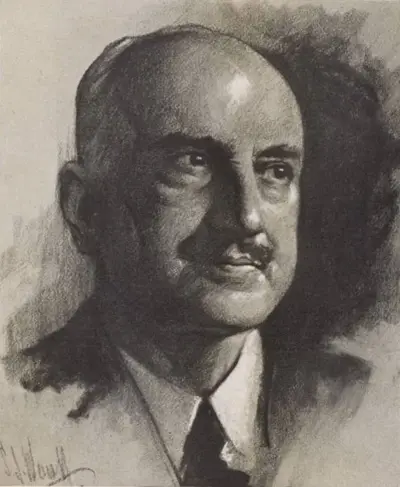
Jorge Agustín Nicolás Ruiz de Santayana y Borrás, known in English as George Santayana, was a philosopher, essayist, poet, and novelist. Originally from Spain, Santayana was raised and educated in the US from the age of eight and identified himself as an American, although he always retained a valid Spanish passport. At the age of 48, Santayana left his position at Harvard and returned to Europe permanently.
