Xunzi Quotes
In antiquity the sage kings recognized that men's nature is bad and that their tendencies were not being corrected and their lawlessness controlled.
Xunzi. Xunzi: A Translation and Study of the Complete Works, Volume III, Books 17-32. Translated by John Knoblock, Stanford University Press, 1994, p. 152.

There are a number of reasons for punishing someone for violating a law. Confucius argues that when the person will no longer continue to commit the crime, further punishment is uncalled for. However, others would argue that there are other reasons to keep punishing a person including retribution / vengeance, incapacitation (people can’t commit crimes if they are in jail), and prevention (make an example to discourage others).


See {640733} for an English political leader’s similar view.


This is one of the most interesting quotations of Medieval history. The king had equated morality and rule of law with popularity, and has placed a high priority on both—this at a time when most rulers believed that theirs was a divine right of rule. The great ones like Alexander the Great and Theodoric were exceptions. The letter was actually drafted and written by Cassiodorus, the King’s secretary.


Some southerners had gotten out of the Confederate chain of command and were attacking civilian steamboats killing Southerners as well as “Yankees”. See {633900} . While Sherman had trouble with some of his own men on parts of his March Through Georgia, at this time, it was Southerners who were acting independently and improperly. Legally, the Confederates were responsible for any people committing terror. Sherman tried to persuade the Confederate commanders with letters like this, but was very quick to retaliate for every violation. He also complained to some Union officers that they were not moving quickly enough to retaliate and prevent future behavior--{584048}


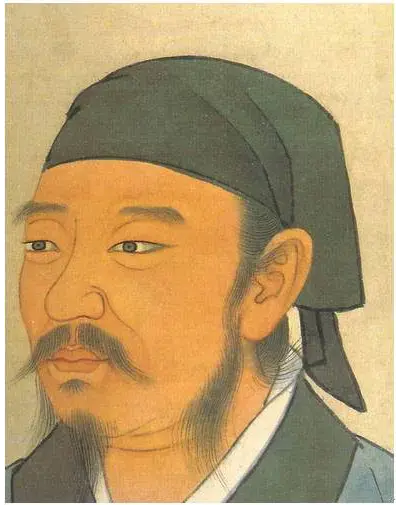
Xunzi (c. 310 – c. after 238 BCE), born Xun Kuang , was a Chinese philosopher of Confucianism during the late Warring States period. After his predecessors Confucius and Mencius, Xunzi is often ranked as the third great Confucian philosopher of antiquity. By his time, Confucianism had suffered considerable criticism from Daoist and Mohist thinkers, and Xunzi is traditionally regarded as a synthesizer of these traditions with earlier Confucian thought. The result was a thorough and cohesive revision of Confucianism, which was crucial to the philosophy's ability to flourish in the Han dynasty and throughout the later history of East Asia. His works were compiled in the eponymous Xunzi, and survive in excellent condition. Unlike other ancient compilations, his authorship of these texts is generally secure, though it is likely that Western Han dynasty historian Liu Xiang organized them into their present form centuries after Xunzi's death.
