James Henry Hammond Quotes
In all social systems there must be a class to do the menial duties, to perform the drudgery of life. That is, a class requiring but a low order of intellect and but little skill. Its requisites are vigor, docility, fidelity. Such a class you must have, or you would not have that other class which leads progress, civilization, and refinement.
Hammond’s rhetorical tactic was to then argue that it was better to have Blacks be the lower class than whites—hence slavery was a logical conclusion.
James Henry Hammond, 1807-1864, Governor of South Carolina (States Rights Free Trader), U.S. Senator (States Rights Democrat, SC), Speech, U.S. Senate, March, 1858
Sourced by: Eigen's Political and Historical Quotations


Robert Allen Zimmerman


This quotation explains why so many of the Southern poor so actively supported the racist Slavery system even though they could not afford slaves and received no direct benefit from slavery or the discrimination against free Blacks. The poor were not at the bottom of the totem pole, and therefore had a dignity and social status, that the poor in a racially integrated society never possessed.


Salisbury was a brilliant, effective prime minister, but he was a snob and not a democrat. See {639131}.


This was the prevailing view in Europe at the time; it was less so in the United States, where there were so many people who owned their own land and farmed it or developed manufacturing facilities and hence were the mind AND the limbs of the enterprises. However, the upper classes tended to agree with the European view. The difference between the American and European views was one of class mobility. In America “limbs” who demonstrated capacities of “mind” were much more able to advance in America. However, even into the 21st century here was a general feeling of the upper class that the “minds” made the critical and impactful decisions. This is one of the reasons that executive and CEO pay advanced so rapidly when compared with workers (the “linbs”).


Garvey created titles and made appointments to the joy of many and the embaraqssment of others.

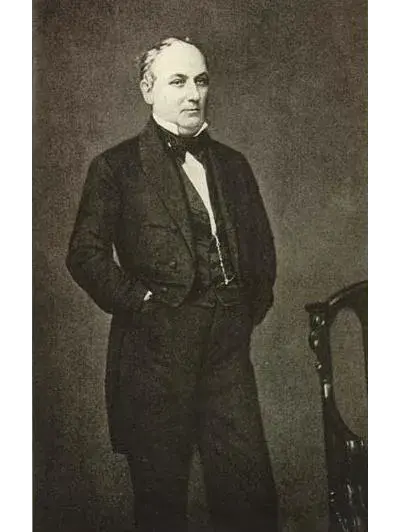
James Henry Hammond was an attorney, politician, and planter from South Carolina. He served as a United States Representative from 1835–36, the 60th Governor of South Carolina from 1842–44, and United States Senator from 1857 to 1860. He was considered one of the major spokesmen in favor of slavery in the years before the American Civil War.
