George D. Herron Quotes
The ignorance of the working class and the superior intelligence of the privileged class are superstitions fostered by ... universities and churches, and by all the centers of privilege.
George D. Herron, 1862-1925, Cleric, Quoted in Upton Sinclair, The Cry for Justice
Sourced by: Eigen's Political and Historical Quotations


This was the prevailing view in Europe at the time; it was less so in the United States, where there were so many people who owned their own land and farmed it or developed manufacturing facilities and hence were the mind AND the limbs of the enterprises. However, the upper classes tended to agree with the European view. The difference between the American and European views was one of class mobility. In America “limbs” who demonstrated capacities of “mind” were much more able to advance in America. However, even into the 21st century here was a general feeling of the upper class that the “minds” made the critical and impactful decisions. This is one of the reasons that executive and CEO pay advanced so rapidly when compared with workers (the “linbs”).


Salisbury was a brilliant, effective prime minister, but he was a snob and not a democrat. See {639131}.

Most pressure for political correctness comes from the center or the left. On this area however, pressure to avoid speaking of this comes from left and right. The left is concerned that by discussing the reality the poorer performing subgroups will be stigmatized and public behavior will make the situation worse. The right would prefer that there is little or no political dialogue regarding the huge differences in outcome in America where individual ability and effort seems to play such a large part of the differential. I addition, they see the making of these distinctions as the beginning of class warfare.

In 1877 Wasburn was dropped from the List of Ministers by the Unitarian Church. He had become quite atheistic.


After Roosevelt, most eras of American politics more or less followed the pattern Roosevelt described herein as a “calamity”, with the anger becoming more or less intense. Jefferson thought that these were natural divisions of politics in all societies--{604810}. The thing that masked this for years was race and slavery. In Lincoln’s time there were liberals and conservatives in both parties if race were ignored. In Theodore Roosevelt’s era, he, Taft and others were generally liberal reformers, while a large number of Republicans were conservative supporters of the status quo. Some democrats were radical reformers like William Jennings Bryan while others were arch conservatives. Until 1964 and the Civil Rights Act there were many conservatives in the Democratic Party, but almost all switched to the Republican Party in anger. The Republican conservatives tended to drive the Republican liberals out of the party and for the last part of the 20th century Roosevelt’s “calamity” well described the American political scene, and the anger increased carrying partisan bitterness into the 21st century.

He was trying to get the Democratic Presidential Nomination.

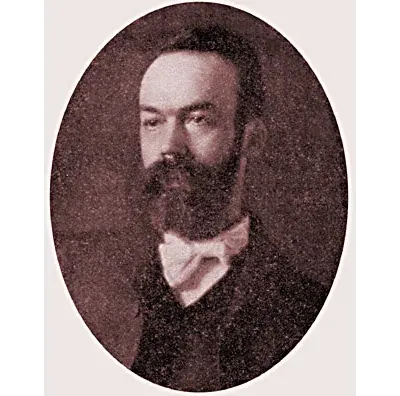
George D. Herron was an American clergyman, lecturer, writer and Christian socialist activist.
