Ohio Quotes
In all elections, all white male inhabitants above the age of twenty-one years, having resided in the State one year next preceding the election, and who have paid or are charged with a State or county tax, shall enjoy the right of an elector;…
The election franchise in Ohio was originally only given to white residents who had paid state or local taxes. At the time, there were no sales or income taxes, so the only people who paid taxes were property owners. So this clause had the same effect as many other state constitutions of the time of limiting voters to the relatively wealthy. See the earlier Massachusetts Constitution {616748}. However, not that by this time race became a criterion in voting eligibility. In the Massachusetts case and some other states, a Black or an Indian who owned property could vote. But in Ohio, race per se was a disqualification if not white. This also precluded, Indians and Asians from voting in Ohio.
Ohio Constitution, November 29, 1802, Article IV, Section 1
Sourced by: Eigen's Political and Historical Quotations

This is an excellent quotation to illustrate the limited voting franchise that existed in the early days of the nation. Note that this constitution, unlike those of Southern states would allow a Black to vote if he had the requisite assets. However, the poor could not vote regardless of race.

What is interesting, that few people realize, is that large number of men who had never voted before, and would not be able to vote afterwards (the were not property owners for example), were allowed to vote in the ratification debate. As a result, an entire new socio-economic class was empowered and became interested in politics for the first time in history. The result was greater and wider public interest than there had been or would be for many years to come. All voting requirements had been set by the states and were still so after the Constitution was adapted and still is the current situation, although there has been a constant battle in many states to keep Blacks and other minorities from voting between the desires of the states and Federal pressure after the Civil War Constitutional amendments.

Hunt gave as an example Mary Smith of Stanmore. This quotation is very interesting in the history of women’s suffrage. Hunt was a strong advocate for Universal Suffrage (See {616653}.) At the time, even men had to be a taxpayer and own a sufficient amount of property to vote. Less than 20% of the population of Britain were allowed to vote. The argument at the time was that the husband would represent the family’s interest at the ballot box and there was no need for women to vote. But by facing parliament with the logical inconsistency of its position, he was able to make his point, although there were very few women like Mary Smith who were single and had the economic resources to qualify. Most widows remarried so even if they had economic resources, there was a man who could assume the then perceived role of head of the household.

This was a year after the United States gave women the right to vote.


America is almost unique among nations in that the methods of elections are different in each state, but at the time even the right to vote was uniquely controlled by the states—even for Federal officials. Even in modern times individual states have controlled the right to vote in many instances. For example in some states convicted felons may not vote while in others they can.


At that time a number of state legislatures all changed their state voting laws to require citizens who try to register to vote to have documentation of various kinds and or obtain special documentation. These were generally possessed by upper class and educated people but not in as large proportions by lower and working class people. To obtain the documents and register if things like original birth certificates were not possessed, the citizen had to lose much of a day’s work and travel some distance. The burden existed on most lower class people and especially the minorities. The courts nullified some of these discriminatory requirements for voter registration, but many were allowed. The rationale was to prevent voter fraud and yet there were almost no cases of voter fraud in the entire country. While the requirements were racially discriminatory, they were also socioeconomically discriminatory. By coincidence, or perhaps not, every state that added these requirements had a Republican controlled state legislature AND a Republican Governor. Despite the effort to suppress Obama and Democratic voters, the effort backfired. Minorities and especially Blacks were so outraged that Jim Crow voting suppression had returned that they made a huge effort to register and get out the vote and Blacks voted in a much larger proportion than historical and well over 90 percent voted for Obama who won the election handily.

Samuel Langhorne Clemens, 1835-1910

Even after the South was defeated in the Civil War, most Southern politicians strove to keep the newly freed Blacks from voting. The vehicle they chose to attain that purpose was the concept of States’ Rights where the states were the sole determiners of who could and could not vote. The majority of the country rejected that view and the Constitution was amended to allow Black men to vote. After reconstruction Black voting in the South was curtailed substantiality by devices such as poll taxes and literacy requirements and terror and intimidation. It was not until the latter part of the 20th century that most Blacks could vote in the Southern States.

Billinghurst was physically handicapped without the use of her legs. She protested and marched in protest parades using a hand propelled tricycle which the police sometimes dumped her out of and left her immobile in alleys.

Also in a letter to a newspaper, June 13, 1836

Preclearance was a requirement that any change in the voting or registration laws, rules or procedures needed to be approved by the Federal Justice Department. He was testifying about why preclearance was important and why it was placed in the Voting Rights Act every time it was reauthorized. See {635271} for what happens without preclearance.

At the time Negroes were prohibited from voting by a series of discriminatory criteria for voter registration and intimidation so that Blacks would not generally even try to register. But the Civil Rights movement changed tactics and organized large scale attempts at voter registration. Mayor Thompson and the white power structure of the town were not going to allow that. They had not only enlarged the police department but the city purchased an a small armed tank.


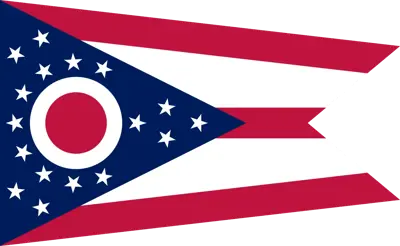
Ohio /oʊˈhaɪoʊ/ (listen) is a state in the Midwestern region of the United States. Of the fifty states, it is the 34th-largest by area, and with a population of nearly 11.7 million, is the seventh-most populous and tenth-most densely populated. The state's capital and largest city is Columbus, with the Columbus metro area, Greater Cincinnati, and Greater Cleveland being the largest metropolitan areas. Ohio is bordered by Lake Erie to the north, Pennsylvania to the east, West Virginia to the southeast, Kentucky to the southwest, Indiana to the west, and Michigan to the northwest. Ohio is historically known as the "Buckeye State" after its Ohio buckeye trees, and Ohioans are also known as "Buckeyes".
