Susan Sontag Quotes
I'm sickened by the way that the delivery of so-called humanitarian aid is once again being used as a justification — or cover — for war.
Susan Sontag, 1933-2004, Writer & Critic, Interview, "The 'Traitor' Fires Back" by David Talbot, Salon.com, October 16, 2001
Sourced by: Eigen's Political and Historical Quotations


After the World War I armistice there were 7,000 American troops remaining in Russian Siberia to the chagrin of the Secretary of War who wanted them removed. One reason given for their presence was to "protect our relief efforts there:"


There were some British politicians who had considered the possibility of supporting the South in the Civil War to assure their supply of cheap cotton. Entering the war by allying with the Confederacy was also a possibility. Lincoln used this phrase and instructed Adams to use that with the British politicians as the result if England get involved with the American Civil war. It is the closest phrase to “World War” until WWI.


She was commenting on the problems of providing humanitarian assistance in a terrorist war. Terrorists have not had the traditional respect for the persons of humanitarian workers who traditionally preferred not to be associated with solders or armed staff.
In every major war in the United States there have been government activities contrary to law, most of which were embarrassments when discovered years later and in retrospect most of which did not help the war effort in any way but undermined the sense of law and order either by not enforcing certain laws (profiteering in WWI or violence against war protesters in the Vietnam War), passing new laws that in retrospect were unjust or unconstitutional (incarceration of Japanese Americans in WWII) or by engaging in illegal activities (illegal spying and detention in the Iraq War.)


The highest court in New York. Kent did not originate this concept. He was stating an age old principle of law: Posse vicinum impediri, ne in suo solo, sine alia causa suaque evidenti utilitate, munimentum nobis propinquum extruat, aut aliud quid faciat, unde justa formido periculi oriatur.

The Secretary General was informed of the North Korean attack on South Korea:

This is a variant of a famous Clauswitz quotation {635143}.


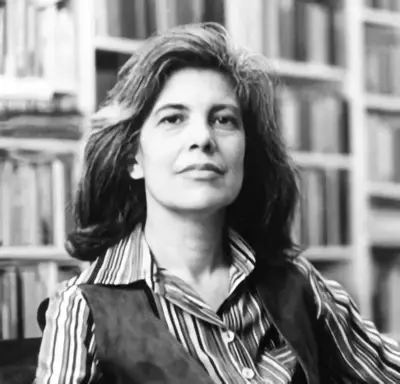
Susan Sontag was an American writer, filmmaker, philosopher, teacher, and political activist. She mostly wrote essays, but also published novels; she published her first major work, the essay "Notes on 'Camp'", in 1964. Her best-known works include the critical works Against Interpretation (1966), Styles of Radical Will (1968), On Photography (1977), and Illness as Metaphor (1978), as well as the fictional works The Way We Live Now (1986), The Volcano Lover (1992), and In America (1999).
