John Berry Quotes
If your library is not 'unsafe', it probably isn't doing its job.
Berry, John N., III. "The 'Unsafe' Library." Library Journal, vol. 124, no. 16, 1 Oct. 1999.


She was dealing with a serious campus situation where an invited speaker, Chief of Police Kelly of New York City was prevented from giving his p resentation on the controversial “Stop and Frisk” rules by student protesters who opposed the practice. Brown’s tradition of hearing anyone on the campus regardless of point of view had been broken to the distress of most students, faculty and alumni.


In 2005 an Egyptian writer, Usama Anwar Ukasha, criticized one of the Prophet’s companion’s role for causing dissention and divisiveness in Islamic history. Some called for his legal punishment for slandering a holy figure (see {588714}) and a law case was brought to force him to divorce his wife—so that she would not be “contaminated by his heretical thoughts. Al-Bana argued for freedom of thought and speech on such subjects. His view was particularly important since he was the brother of Hassan Al-Bana, the founder of the Muslim Brotherhood, a powerful fundamentalist organization. Note that Al-Bana’s call for intellectual freedom does not go so far as to say that it should be legal to criticize The Prophet Muhammad and it illustrates how far even modern Islam has to go to meet reasonable standards of freedom of thought and speech.


Islamic modernists like Serageldin are many among the educated Muslims but their views are often drowned out by the violence and extremist statements of the fundamentalists. Ironically, the necessary intellectual freedom existed in the Islamic world one thousand years ago and Islamic science and other learning was as advanced as any and superior to most including the Christians.

Note the language used to describe the American government at the time. To the founders, it was an EXPERIMENT. Nothing like that had ever been tried before. And none of them were sure it would work. After defeating the British, they could have chosen for their new independent nation any one of dozens of well-established forms of government. But these were all flawed. So they risked the new nation on a form that had little or no precedent and might or might not survive. Centuries later many national leaders and legislators were fearful to try anything that they were not highly certain would be effective. Experiments were rare until there were crises so great that none of the orthodox solutions would be sufficient, and even then the innovators were criticized such as with Lincoln and Franklin Delano Roosevelt. They were candid enough to admit that they were experimenting. FDR in particular announced experimentation as a policy with rapid change for the experiments that did not work out of which there were several.


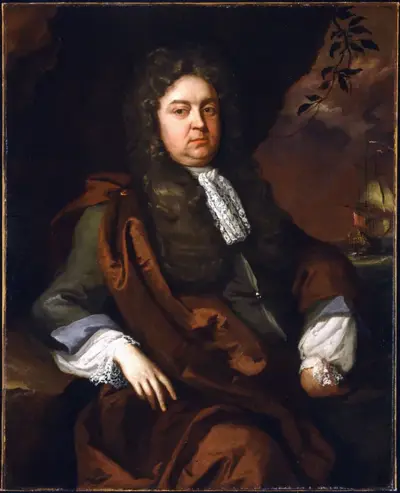
Admiral Sir John Berry was an English naval officer of the Royal Navy, and was in 1675 the captain of the annual convoy to Newfoundland that took place during the years of the colony's founding. Berry's advocacy of the right of the small number of settlers to remain in Newfoundland, which was opposed by the British Committee for Trade and Plantations, was an important factor in determining the future course of European settlement in Newfoundland.
