Friedrich Hayek Quotes
If we were to make no better use of victory than to countenance existing trends in this direction, only too visible before 1939, we might indeed find that we have defeated National Socialism merely to create a world of many national socialisms, differing in detail, but all equally totalitarian, nationalistic, and in recurrent conflict with each other.
Hayek, Friedrich A. The Road to Serfdom. University of Chicago Press, 1944, p. 220.


The United States Senate refused to ratify the Treaty that President Woodrow Wilson had negotiated establishing the League of Nations.


1st Earl Lloyd-George of Dwyfor. International organizations have been notoriously inept at protecting countries from aggression or minorities from persecution and ethnic cleansing and genocide. The Armenian genocide by the Turks was the exemplar at the time, but the UN peacekeepers refused to fight to prevent the Serbs from murdering 7,000 Bosnian Muslims. When they were protecting the Israeli-Palestinian borders, they did nothing to stop Arab Armies from attacking Israel right through the UN Troops. They did nothing to help prevent the Ruanda genocide. UN “troops” are rarely willing to risk their lives for the victimized people or the International Organization itself.

He used the “united nations” as a general description as the UN had not been created or named yet, However, as this quotation demonstrates, the President was already thinking about a UN idea, but as a realist, he explained that the great powers had to come to some agreement of interests. Actually China and France, at the time, would go along with whatever the United States and Britain wanted to do and had a great common interest, and there was already a strong association of interests between Britain and America. Russia was to be the problem and a complete common interest was never to be, but there was enough to get the United Nations started.


Harding however made no effort to ever implement any such association in his tenure.


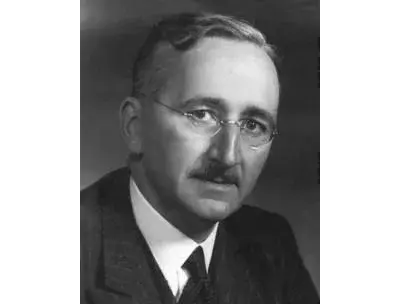
Friedrich August von Hayek CH FBA, often referred to by his initials F. A. Hayek, was an Austrian-British economist and philosopher who is best known for his defence of classical liberalism. Hayek shared the 1974 Nobel Memorial Prize in Economic Sciences with Gunnar Myrdal for his "pioneering work in the theory of money and economic fluctuations and [...] penetrating analysis of the interdependence of economic, social and institutional phenomena". His account of how changing prices communicate information that helps individuals co-ordinate their plans is widely regarded as an important achievement in economics, leading to his Nobel Prize.
