Arthur Henderson Quotes
The Disarmament Conference has become the focal point of a great struggle between anarchy and world order... between those who think in terms of inevitable armed conflict and those who seek to build a universal and durable peace.
Henderson, Arthur. "Essential Elements of a Universal and Enduring Peace." Nobel Lecture, 11 Dec. 1934, Oslo. Nobel Lectures, Peace 1926-1950, edited by Frederick W. Haberman, Elsevier Publishing Company, 1972.


Andrew Carnegie was then President of the New York Peace Society.


Actually it was the United States which insisted in the veto which required consensus of the great powers of the time. It was Russia which ended up using it far more often than any other nation.


Clark, a conservative, was one of those who did not believe that the United Nations or any international organization have any enforcement powers but should just be a forum for deliberation. By the end of the 20th century one of the major conservative complaints about the United Nations was that it could not enforce its resolutions and was a paper tiger.

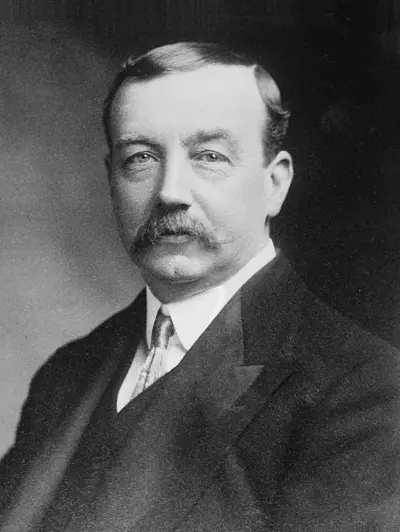
Arthur Henderson was a British iron moulder and Labour politician. He was the first Labour cabinet minister, won the Nobel Peace Prize in 1934 and, uniquely, served three separate terms as Leader of the Labour Party in three different decades. He was popular among his colleagues, who called him "Uncle Arthur" in acknowledgement of his integrity, his devotion to the cause and his imperturbability. He was a transitional figure whose policies were, at first, close to those of the Liberal Party. The trades unions rejected his emphasis on arbitration and conciliation, and thwarted his goal of unifying the Labour Party and the trade unions.
