Muhammad Ali Jinnah Quotes
If we are to make any real, speedy and substantial progress, we must earnestly tackle this question and bring our educational policy and program on the lines suited to the genius of our people, consonant with our history and culture, and having regard to the modern conditions and vast developments that have taken place all over the world. .
Jinnah’s vision was for a modern educational system and curriculum throughout Pakistan. He would not have recognized the religious madrassas that taught only the Koran and Islamic subjects that became so prevalent in Pakistan by the 21st century.
Muhammad Ali Jinnah, 1876-1948, Founder of Pakistan and First Governor General, Speech, All-Pakistan Educational Conference, Karachi, November 27, 1947
Sourced by: Eigen's Political and Historical Quotations


The Western style of education was extremely effective for the Hindus, but was much less successful for the Muslims. The result was that over time, the Hundus achieved success in the professions, civil service, arts and sciences while the Muslims did not, thus changing the then existing parity of the two groups. For more on the difficulty that the Muslims had with British public education, see {616919} & {616925}.


His hope that the elite intelligentsia would lead the nation was thwarted by Islamic fundamentalism which destroyed most of Pakistan education by only teaching religion in its Madrassas and not allowing the leadership to have compulsory education. There has been an enormous brain drain with a huge number of the Pakistani intelligentsia on which Jinnah pinned his hopes, had no opportunity in Pakistan and emigrated to the United Kingdom and America.


This quotation is fascinating but sad. In 1902, Aga Kahn III and other Muslim reformers gathered to improve the terrible state of Muslim education. Muslims could attend the English operated public schools which were excellent, but the Imams fought these schools as they were purely secular and not under their control. Yet the Madrassas religious schools that then existed taught by rote and only Islamic religious content—no mathematics, science, other literature, art or anything else. Much of the teaching was religiously extreme with not even modern religious content. Over a century later the Schools of Pakistan—the Islamic nation carved out of India and those of most of the Arab nations are little better and despite a century of progress, the curriculum is the same.


L. P. Jacks. Since this quotation education the world over has vastly improved. However arguably, the reasons were not ethics of nations and their leaders but a combination of public demand and the clear coupling of education with necessary qualifications for jobs and scientific and technological development of nations.
In almost all societies until recent times, many uneducated people—especially from rural areas—were not enthusiastic about sending their children to school. They worried about losing the farm or factory labor of the children, losing control / influence, children learning unacceptable moral or religious ideas, and social mobility was so poor that many parents thought that it would never help the children.


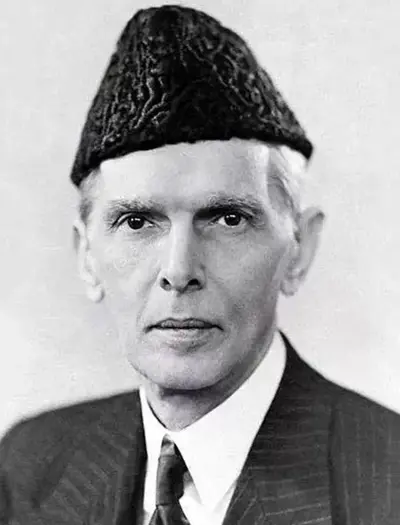
Muhammad Ali Jinnah was a barrister, politician and the founder of Pakistan. Jinnah served as the leader of the All-India Muslim League from 1913 until the inception of Pakistan on 14 August 1947, and then as the Dominion of Pakistan's first Governor-General until his death. He is revered in Pakistan as the Quaid-i-Azam ("Great Leader") and Baba-i-Qaum ("Father of the Nation"). His birthday is observed as a national holiday in Pakistan.
