Edmund Burke Quotes
If to preserve political independence and civil freedom to nations was a just ground of war, a war to preserve national independence, property, liberty, life, and honor from certain universal havoc is a war just, necessary, manly, pious; and we are bound to persevere in it by every principle, divine and human, as long as the system which menaces them all, and all equally, has an existence in the world.
Edmund Burke, 1729-1797, Irish Orator & Member of the British Parliament, Letters on a Regicide Peace, Letter I, 1796
Sourced by: Eigen's Political and Historical Quotations


Under the treaty between Ireland and England that created the Irish free state, in case of war or other contingency, the Irish Free State was required to allow Great Britain to use specific seaports. However, De Valera hated the English, originally opposed the treaty, and was adamant that the Irish Free State be neutural in WWII. He therefore refused to fulfill the Irish obligation. For Churchill this was the last chance for De Valera to show that the Irish Free State was a real nation with rights and obligations. Interestingly, although De Valera did not want to assist the British fighting the Germans, over 70,000 Irishmen went to England and Volunteered to fight on the British side. There were Irish batallions fighting on the allied side but the Irish Free State was neutural. De Valera made matters worse when he allowed German agents into the Irish Free State to try and go from there to England as well as set up observation posts to guide German bombers attacking the populated city of Belfast and other parts of Northern Ireland. See {639724} for Chirchill’s later reflective commentary on the situation.

Leading the Senate opposition to the League of Nations proposed by Woodrow Wilson:

This newspaper was an English language organ published by General Allenby’s British and Allied forces in the Middle East. Prior to the war, the Middle East was all part of the Ottoman Empire. However, the Ottoman Turks sided with Germany in WWI and their Middle East dominions were targets for the allied military strategy.


The Chief Secretary, Lord Castleregh, had put forward a resolution to bring about the unification of Great Britain and Ireland under the single British Parliament at Westminster. He and his allies had bribed a number of the Irish MPs to support the union. With Union some Irish MPs would then be able to win seats representing Ireland in the British Parliament. Although Grattan and most of the Orangemen opposed the Union, 4 months later, the bill passed comfortably. Ironically, Grattan was one of the Irish MPs whose popularity won a seat in the unified British Parliament.

The “Defenders” were the Catholic terrorists who along with their Protestant Orange Order counterpart were in sporadic acts of violence and terrorism with no military objective. The French Army was not to sail for Ireland where they would link up with The Defenders and take Ireland from the English. The invasion failed when terrible weather forced the French troop ships carrying more than 45,000 invading soldiers to cut their anchor cables and return to France.


In most revolutionary settings leaders have to persuade people who have voted with no success to turn to the rifle. In Ireland at this point, almost all the nationalsits knew that the rifle would help them but they were not sure that a vote would have the effect of a bullet.


For his seditious activities he was sentenced to penal servitude for life. He escaped and came to America where he entered politics

See Noah Webster and Timothy Pickering for similar positions. The War of 1812 was very unpopular with the New England states. They had the most developed trade with England and were economically injured by the curtailment of that trade. The citizens of Essex wanted to give the State Legislature the most possible moral and political power to negotiate an end to the war.
This audacious general and Queen of one of the Roman Provinces conquered most of the area including Egypt. Then she declared her independence from the Roman Empire itself. A master of multilateral coalition leading, she was able to attract nearby provinces to join her. The Roman Emperor Aurelian himself set out to subjugate Zenobia—the Roman, Latin name. In the first battle, the Romans won a tactical victory for some territory but lost many men. The Emperor asked Bat Zabbai to surrender, but she refused in this famous reply. She was counting on the fact that the Romans would not accept the high losses she was inflicting. See Aurelian’s letter to the Roman Senate {606345}. The Romans did however did pay the price and eventually conquered Bat Zabbai and brought her to Rome as a captive. However she was very much admired by Roman society and after she pledged to not revolt against Rome, she was allowed to live in Rome—but not go back to Syria where she might raise another army. She became a major celebrity of Roman society and married a Roman Senator. Her exploits although well known at the time lapsed into obscurity in that later Roman Christian society did not see her as a fitting Christian female example, and when Islam developed in Syria, she was not considered a model Muslim woman. So a key figure in Roman history was ignored by most of the cultures until recently where the original documentation of the time has been made more widely available.

When he first came to Congress, there were major American problems with both France and England who were fighting each other and punishing America for not boycotting the other nation. Many argued for peace and living with the French and English impression of American seamen and confiscation of American Cargoes. Clay and others thought the appeasement price was too high and urged war. The War of 1812 followed.


South America, invaded and colonized by Spain was a brutal combination of slavery and repression. Even the European colonists suffered under the terrible combination of exploitation, militarism and religious dictatorship. Independence from Spain was equally bloody as unlike in North America where the fight was against British rule, in South America the black slaves, the indigenous Indians and the white colonists all had scores to settle with the Spanish rulers. And the Spanish in turn realized that and brutally repressed all rebellion attempts. Atrocities were common, and committed by almost all, including even idealists like Bolivar.

The Congress was encouraging all men volunteer for the military and defend the new nation now that the British were landing in force to put down the revolution. By modern language standards, this is a little “over the top” but it shows not only the passion felt by the Congress but the importance they placed on the struggle.

1st Earl of Chatham. The Continental Congress had endorsed and sent to England a set of resolutions from Suffolk County, Massachusetts, drawn up by Joseph Warren. Legislators forever since have admired the logic and presentation of the case for America. The King and the Prime Minister failed to heed Pitt’s view, and the Declaration of Independence and the American Revolution followed.
Independence and Free Trade the two issues closest to his heart.

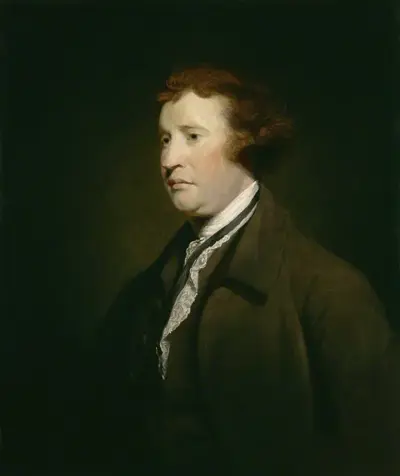
Edmund Burke was an Irish statesman, economist, and philosopher. Born in Dublin, Burke served as a member of parliament (MP) between 1766 and 1794 in the House of Commons of Great Britain with the Whig Party after moving to London in 1750.
