Joseph G. Hamilton Quotes
If this is to be done in humans, I feel that those concerned in the Atomic Energy Commission would be subject to considerable criticism as admittedly this would have a little of the Buchenward touch.
In 1950 a number of experiments were planned and carried out under the auspices of the Atomic Energy Commission where humans were exposed to radiation, often without their informed consent.
Joseph G. Hamilton, Radiation Biologist, Atomic Energy Commission, Memorandum to Dr. Shields Warren, 1950
Sourced by: Eigen's Political and Historical Quotations


Any object that has been contaminated gradually loses its radioactive strength. It has a “half life”. This is the amount of time that it takes for the radiation in an object to lose half its strength. Different materials have different half lives. Nuclear waste from a power plant for example might have a half life of tens of thousands of years.

Breslin was criticized in a Federal report for his alarmist news coverage of the Three Mile Island nuclear mishap:

The alternative deterrent was to maintain an army of over 2 million men overseas in both Europe and Asia, and the cost was much greater than the then perceived cost of nuclear weapons. At the time no one figured the cost of coping with the radioactive material and waste as well as the cleanup of nuclear bomb factories like Hanford. These costs were still not known byt the 21st century.

Nuclear fusion is different from nuclear fission that currently powers atomic power plants. Fusion is the process the sun uses to generate all its power. Scientists understand exactly how fusion works—it’s much simpler than fission, but actually creating a way of doing it on earth has been a very difficult challenge. The National Ignition Facility has been trying to produce a fusion reaction for a number of years with no success.

The Russians had just tested a what was almost an atomic bomb and a nuclear weapon was only months away. Eisenhower was advised to initiate an all out nuclear attack before the Russians would have a nuclear weapon with which to retaliate. If Eisenhower did not take advantage of this window, there would be no more opportunity and the Russians would also become a nuclear power. The situation was similar to that facing the Americans and Israelis with Iran in the early years of the 21st century,

The fear of a nuclear accident is not based on the statistics or probability of death or injury. When a person chokes, it is only that person who may die. IF there is a nuclear power plant meltdown, millions of people can be injured or killed. It is the possible scale of the problem which makes most citizens fearful.


This was a political use of sarcasm and irony. Oak Ridge was the site of the largest facility for producing fissionable material in the world as the result of the Manhattan Project. And yet the problem of what to do with the radioactive waste has never been resolved. So Oak Ridge was producing more and more radioactive uranium in the area without a resolution in sight. The “joke” was that the people in the area were immune, so production could continue without a solution to radioactive waste.

The Scientific Project that developed the Atomic Bomb. In the development of the atomic bomb there was a hypothetical possibility that the Earth as we know it might be destroyed. Robert Oppenheimer the scientist who directed the bomb development and his staff framed the question which Oppenheimer presented to Arthur Compton. The decision was that Oppenheimer’s team would calculate every possibility and make sure that such a catastrophe was not within the realm of possibility. They did all the calculations, concluded that there was no possibility, the bomb was exploded, and the question was then finally answered in the negative.


Under this initiative the US declassified and distributed technical, previously secret information, about atomic science to the world for scientific development. It has been very successful and there are few modern nations that have not benefitted from the program.

During the meltdown of the Japanerse nuclear reactors at Fukashima, American sailors were deployed to provide critical assistance fram an American aircraft carrier in the area. They played a significant role in getting the reactors under control. Many of the Japanese at the emergency area had suffered serious illness from the radiation exposure abd a number died. The crew of the aircraft carrier had developed a highly unusual prevelance of serious illness assocated with radiation exposure. The U. S. Defense Department was "styding the matter" but had not decided that the unusual illness patern was related to their assignment assisting in th emergency. A number of the sailors had come to japan and asked for damages from the Raactor company which like most American Corporations would not do or say anything. The Japanese government also was silent on the issue when the sailors came to Japan, However, this former prime minister felt so strongly that he visited the Sailors and took up their cause in letting the Japanese public know what had happened and how the government and the electic company were acting. This was Koizumi's tearful response to the press covering the saolors and their request.


Rutherford had been the first to split the atom in 1919.
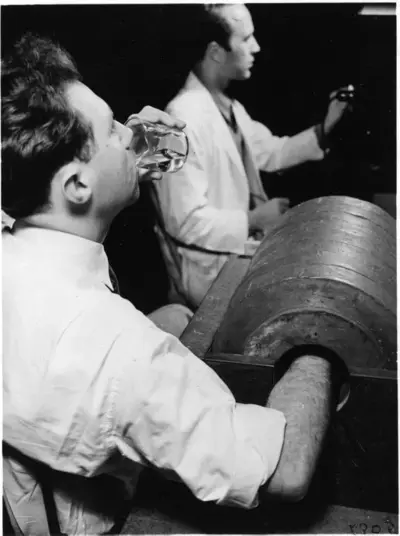
Joseph Gilbert Hamilton was an American professor of Medical Physics, Experimental Medicine, General Medicine, and Experimental Radiology as well as director (1948-1957) of the Crocker Laboratory, part of the Lawrence Berkeley National Laboratory. Hamilton studied the medical effects of exposure to radioactive isotopes, which included the use of unsuspecting human subjects.
