Hyman Rickover Quotes
I do not believe that nuclear power is worth it, if it creates radiation.
Hyman Rickover, 1900-1986, U. S. Navy Admiral, "Father" of the nuclear submarine, Testimony to Congress, January 28, 1982
Sourced by: Eigen's Political and Historical Quotations

Corporations in the nuclear business argue that Nuclear power is less expensive than otehr forns of ower that are in common use. However, when a nation adds the huge cost of maintianing a scientific infrastructure to inspect and regulate the nuclear power plants, and the costof establishing the contingency capability of popularion evacuation and containment when there is a nuclear accident, and then the cost of safely stopring and containing the spent but deadly radioactive fuel, the incredibly high cost of insurance, then it is clear that nuclear power is the most expensive form of power. However, some countries do it better than others with France being the only country at the beginning of the 21st century that operated nuclear power safely and efficiently. The United States, Russia and Japan had huge costs


Any object that has been contaminated gradually loses its radioactive strength. It has a “half life”. This is the amount of time that it takes for the radiation in an object to lose half its strength. Different materials have different half lives. Nuclear waste from a power plant for example might have a half life of tens of thousands of years.


Breslin was criticized in a Federal report for his alarmist news coverage of the Three Mile Island nuclear mishap:


There had been so much nuclear activity—military and civilian—that he thought it inevitable, either by intention or accident, that there would be some catastrophes. Chernobyl and the crash of a nuclear bomb equipped plane in Spain destroyed the two areas for years thereafter proved him prescient but fortunately none of the “incidents” were bad enough to affect millions of people significantly although the damage of Chernobyl is still being discovered.
He was speaking from retirement. When he was Prime Minister--2001-2005, and active politically, he was in favor of nuclear power for Japan. But after the meltdown of the reactors at Fukishima, he saw happening exactly what the corporation executives running the nuclear power told him could never happen. He aslo supported the claims of American Sailor who had provided much help in the nuclear emergency that they were suffering from deseases brought on by teh excessibe radiation that they encountered.


The Chernobyl accident killed many, polluted a huge section of Russia for years, and even spread radiation thorough out Europe and Scandinavia.

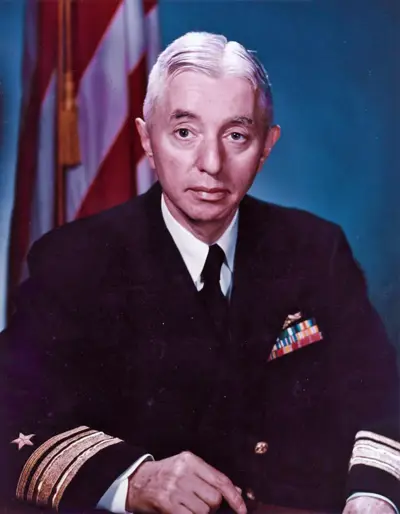
Hyman G. Rickover was an admiral in the U.S. Navy. He directed the original development of naval nuclear propulsion and controlled its operations for three decades as director of the U.S. Naval Reactors office. In addition, he oversaw the development of the Shippingport Atomic Power Station, the world's first commercial pressurized water reactor used for generating electricity. Rickover is also one of four people who have been awarded two Congressional Gold Medals.
