Richard Henry Lee Quotes
If the federal constitution is to be construed so far in connection with the state constitutions, as to leave the trial by jury in civil causes, for instance, secured; on the same principles it would have left the trial by jury in criminal causes, the benefits of the writ of habeas corpus, etc. secured; they all stand on the same footing; they are the common rights of Americans, and have been recognized by the state constitutions.
Lee, Richard Henry. Observations Leading to a Fair Examination of the System of Government Proposed by the Late Convention. New York, Thomas Greenleaf, 1787, p. 23.


Mosley had been incarcerated without charges or trial under the “national emergency” of the Second World War. This prevented him from organizing his “Blackshirts.” When it was clear that Germany would lose the war, Oswald was released, but without the prospect of Fascism dominating continental Europe, there was little interest in Fascist movements in England.


Jefferson and others insisted on a Bill of Rights where rights were explicit and not inferred or dependent on the goodness of the particular government in power.
Note the use of the phrase “against the government.” One of the unique aspects of the American Constitution and The Bill of Rights is that the government is considered a potential and even probable infringer on the liberties of the people. It is almost as though the government was the potential enemy. Modern libertarians state this very explicitly and it is ever present in the views of both the right and left wings of American politics. Most centrists recoil at the thought that some citizens see the government as the enemy, but even in America there have been times where the government has infringed on the rights of citizens only to have the courts or future administrations and Congresses correct the error.

See George Mason for the contrary view. {606646}


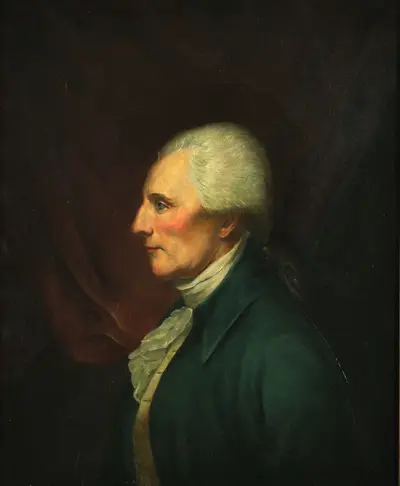
Richard Henry Lee was an American statesman and Founding Father from Virginia, best known for the June 1776 Lee Resolution, the motion in the Second Continental Congress calling for the colonies' independence from Great Britain leading to the United States Declaration of Independence, which he signed. He also served a one-year term as the President of the Continental Congress, was a signatory to the Articles of Confederation, and was a United States Senator from Virginia from 1789 to 1792, serving during part of that time as the second President pro tempore of the upper house.
